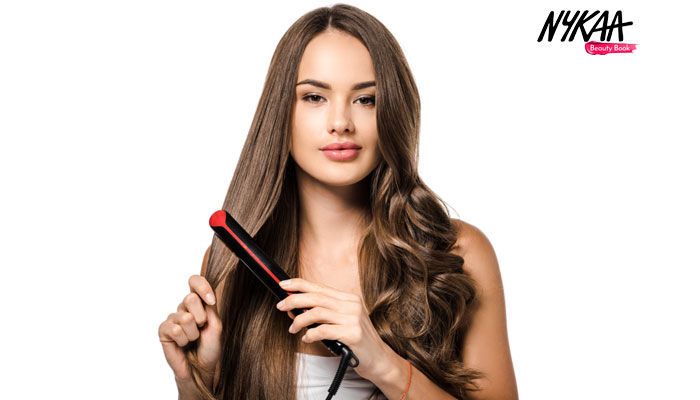
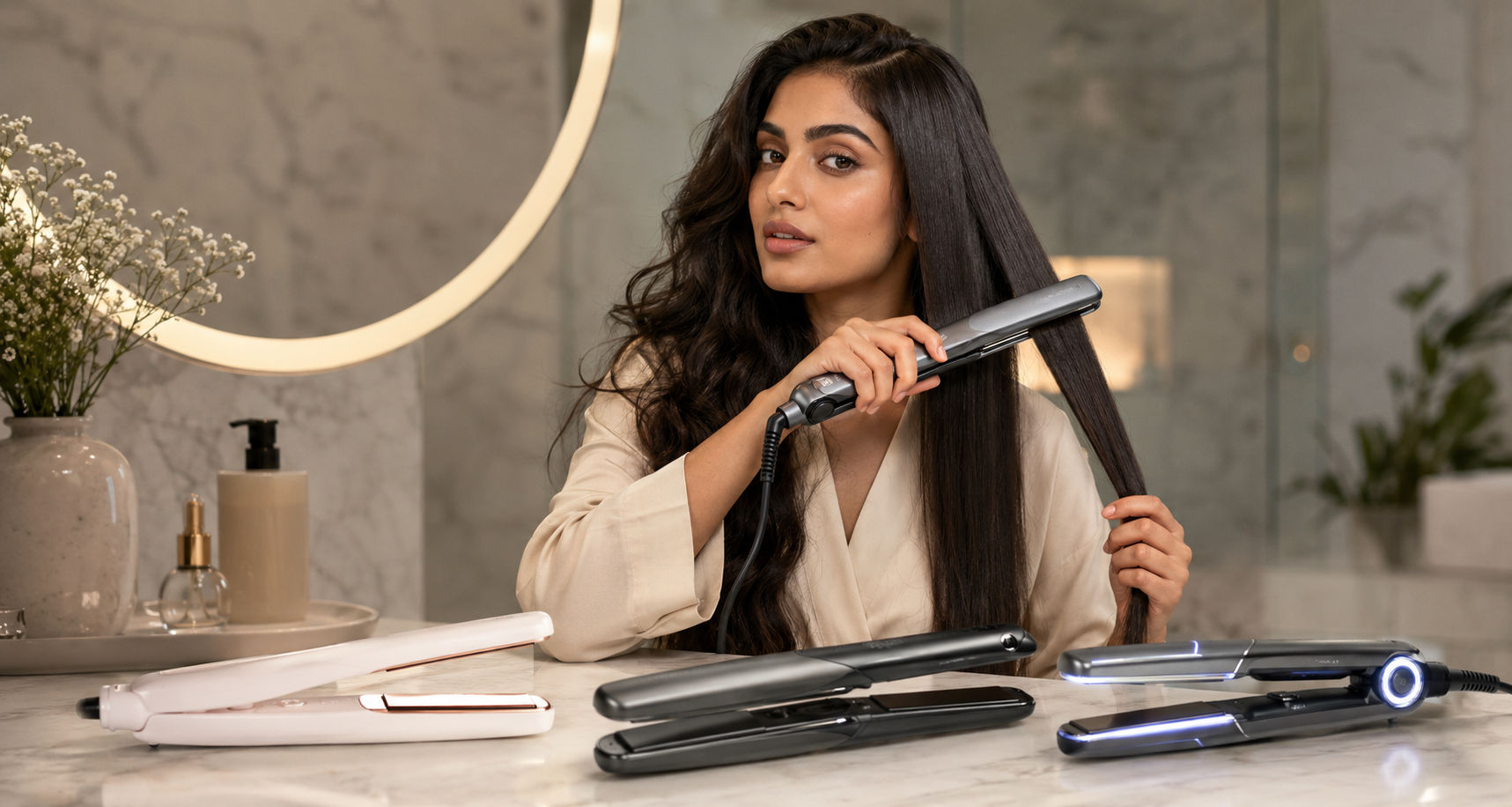
Ceramic straighteners are often preferred for fine to normal hair because they distribute heat evenly, while titanium plates are popular for thick or coarse hair thanks to their faster, more powerful performance. Ionic technology, meanwhile, is designed to help reduce frizz and flyaways, making it a useful feature for humid climates and frizz-prone hair.
In This Story:
- Why Plate Material Matters
- Why Ceramic Is So Popular
- Who Should Choose Ceramic?
- Why Titanium Works Faster
- Who Should Choose Titanium?
- What Ionic Technology Does
- Ceramic vs Titanium vs Ionic Explained
- Why Fine Hair Needs Less Heat
- Why Thick Hair Needs More Power
- Why Temperature Settings Matter
- How Humidity Affects Hair
- Which Straightener Should You Choose?
- Why Price Isn’t Everything
- FAQs
Buying a hair straightener should be simple.
In reality, it rarely feels that way. You start looking at a few options online and suddenly every product seems packed with features. Ceramic plates. Titanium plates. Ionic technology. Adjustable temperatures. Floating plates.
After a while, most of it starts blending together. The good news is that you don't need to understand every technical detail to make a good choice. In most cases, the right straightener comes down to one thing: your hair type.
A tool that works brilliantly on thick, coarse hair might feel too harsh for fine hair. And sometimes the straightener with the longest feature list isn't necessarily the one you'll enjoy using every week.
Why Plate Material Matters
When people compare straighteners, the first thing that usually comes up is the plate material.
This is because the plates are the real touch to your hair.
Different materials transfer heat differently, which can affect:
- styling speed
- smoothness
- heat exposure
- overall hair feel after styling
This doesn't mean one plate type is perfect for everyone. It simply means certain options tend to suit certain hair types better.
Ceramic Straighteners: A Popular Everyday Choice
Ceramic straighteners have been around for years and there’s a reason they’re still so popular.
They tend to heat evenly, which helps reduce those random hot spots that can make styling feel unpredictable.
Many people like ceramic because it feels fairly straightforward to use.
Hair generally slides nicely between the plates and the experience overall tends to be more controlled than aggressive.
For someone buying their first straightener, that's often reassuring.
Who Usually Likes Ceramic Straighteners?
Ceramic tends to work well for people with:
- fine hair
- normal hair
- slightly wavy hair
- hair that feels dry easily
The heat is usually distributed evenly, which can make styling feel gentler.
That's one reason ceramic remains such a common recommendation for home use.
If you're standing in a store with no idea where to start, ceramic is often the safer choice.
Titanium Straighteners: Faster and More Powerful
Titanium straighteners feel different almost immediately.
One of the first things people notice is how quickly they heat up.
They're often chosen by people who don't want to spend ages styling their hair every morning.
Titanium plates are known for:
- fast heat transfer
- quicker styling
- strong performance on resistant hair
- maintaining temperature well
That's why you'll often see them used in salons.
When you're working with thick hair all day, speed becomes important.
Who Benefits Most From Titanium?
Titanium often appeals to people whose hair is:
- thick
- coarse
- dense
- very curly
Some hair types simply take longer to straighten.
In those situations, titanium can make the process feel much quicker.
That doesn't automatically make it better. It just means it's designed for a different job.
What Is Ionic Technology, Exactly?
This is probably the feature that causes the most confusion.
Partly because it sounds like a plate material when it isn't.
Ionic technology is usually an additional feature found in some straighteners.
It's commonly associated with helping reduce:
- static
- flyaways
- frizz
People living in humid climates often pay attention to this feature because humidity and frizz tend to go hand in hand.
Some users notice a visible difference.
Others simply feel their hair looks a little smoother after styling.
Ceramic vs Titanium vs Ionic: Quick Comparison
| Feature | Ceramic | Titanium | Ionic Technology |
|---|---|---|---|
| Heat Style | Even and steady | Fast and intense | Depends on model |
| Best For | Fine to normal hair | Thick or coarse hair | Frizz-prone hair |
| Styling Speed | Moderate | Fast | Varies |
| Learning Curve | Beginner-friendly | Requires more control | Additional feature |
| Hair Finish | Soft and smooth | Sleek and straight | Less static |
Most buying decisions usually come down to ceramic versus titanium.
Ionic technology tends to be something extra rather than the main reason to buy a straightener.
Does Fine Hair Need High Heat?
Usually not. A lot of people assume higher temperatures automatically create better results.
But fine hair often straightens quite easily.
When heat is pushed too high, strands can start feeling:
- dry
- rough
- brittle
That's why many people with fine hair do perfectly well with a ceramic straightener and moderate temperature settings.
Why Thick Hair Often Needs More Power
If you've ever spent forty minutes straightening your hair only for it to become wavy again an hour later, you already know the struggle.
Thicker hair often responds differently.
Many people with coarse or dense hair prefer titanium because:
- fewer passes are needed
- styling feels quicker
- results often last longer
That efficiency is one of titanium's biggest advantages.
Don't Ignore Temperature Settings
This feature often matters more than people expect.
Hair changes. Freshly colored hair may need lower heat.
Healthier sections may tolerate slightly higher temperatures.
Having adjustable settings means you aren't locked into one styling approach.
It's one of those features you might not think about immediately but end up appreciating over time.
Humidity Can Change Everything
Anyone who has dealt with monsoon weather already knows this.
Hair that behaves perfectly indoors can suddenly become frizzy the moment it steps outside.
Humidity often brings:
- puffiness
- flyaways
- loss of smoothness
That's where ionic features tend to attract attention.
Anything that helps manage frizz becomes much more appealing when the weather starts working against you.
Which Straightener Should You Choose?
Choose Ceramic If:
- You have fine or normal hair
- You style frequently
- You're buying your first straightener
- You prefer a more forgiving tool
Choose Titanium If:
- Your hair is thick or coarse
- Styling takes too long
- You want faster results
- Your hair resists straightening
Choose Ionic Features If:
- Frizz is your biggest concern
- You live somewhere humid
- Flyaways are a daily battle
The Best Straightener Isn't Always the Most Expensive
It is easy to think that a higher price will automatically lead to better results.
A straightener that matches your hair type usually performs better than an expensive model designed for completely different hair needs.
The goal isn't chasing the hottest temperature or the longest feature list.
It's finding a tool that makes styling feel easier and leaves your hair looking the way you want it to.
That's usually what matters most.
Frequently Asked Questions
-
Is ceramic or titanium better for hair?
Neither is better for everyone. Ceramic often suits fine to normal hair, while titanium is commonly preferred for thick or coarse hair.
-
Do ionic straighteners help with frizz?
Many people find they help reduce static, flyaways, and humidity-related frizz.
-
Which straightener is best for beginners?
Ceramic straighteners are often considered the easiest option for people new to heat styling.
-
Can titanium straighteners be too strong for fine hair?
They can be if the temperature is set too high. Adjustable heat settings are especially important for fine hair.
-
Is a heat protectant still necessary?
Yes. No matter which plate material you choose, a heat protectant remains an important part of heat styling.
-
What straightener is usually recommended for thick hair?
Many people with thick or coarse hair prefer titanium straighteners because they work quickly and maintain heat efficiently.
-
Does humidity affect straightened hair?
Yes. Humidity can contribute to frizz, puffiness, and flyaways, which is why some people prefer ionic features in humid climates