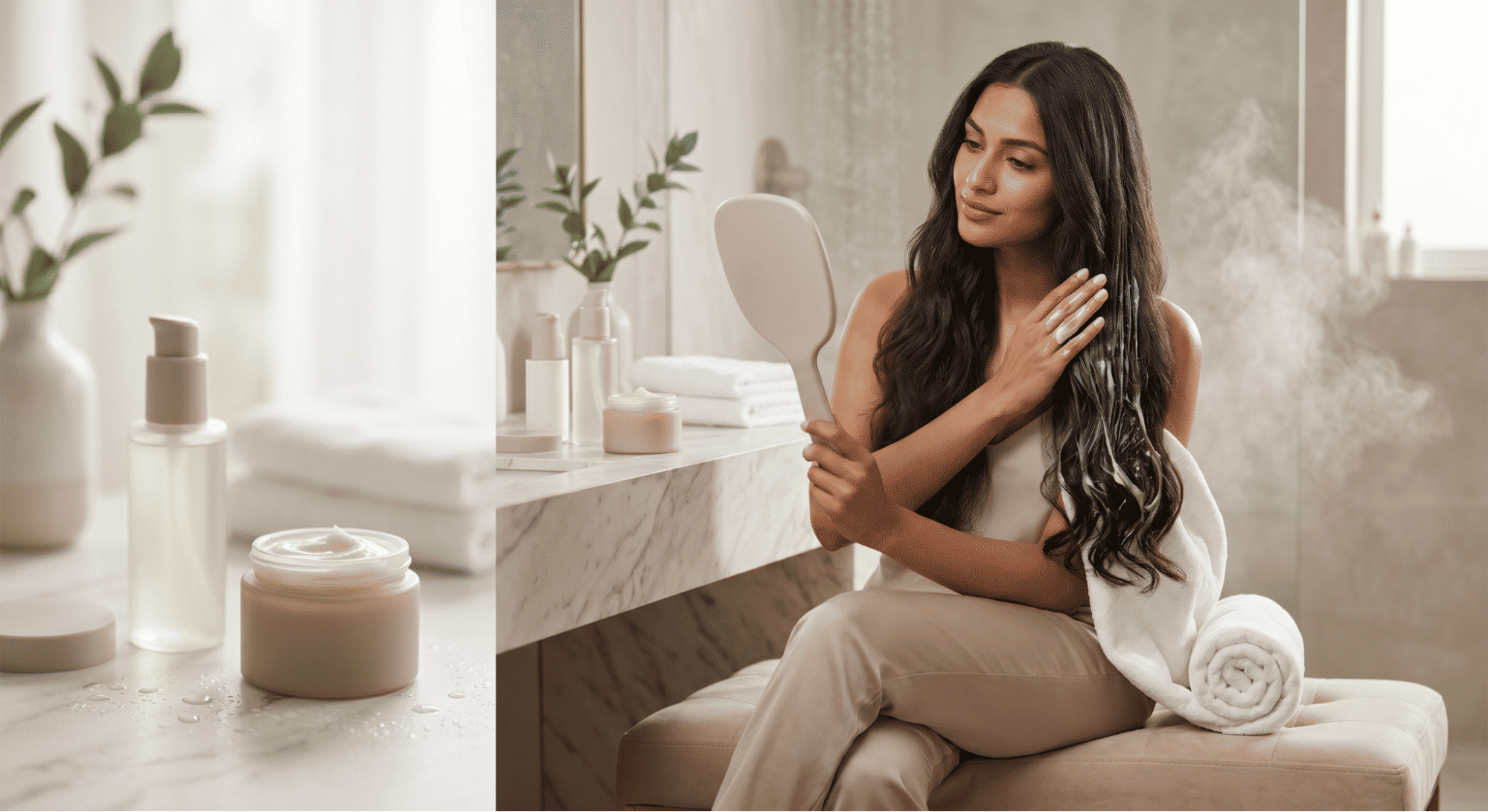
Conditioner helps with everyday softness, detangling and manageability, while a hair mask is typically used when hair feels drier, rougher or more stressed than usual. That's why many people use conditioner regularly and reach for a hair mask only when their hair needs extra moisture or care.
In This Story:
- Hair Mask vs Conditioner Explained
- What Conditioner Does
- What A Hair Mask Does
- Can A Hair Mask Replace Conditioner?
- Who Benefits Most From Hair Masks?
- When Conditioner Is Enough
- Hair Mask vs Conditioner Comparison
- How Weather Changes Hair Needs
- Choosing By Hair Type
- Why More Products Aren't Better
- FAQs
If you've ever stood in a store looking at a hair mask and a conditioner, you've probably wondered whether there's actually much difference between them.
After all, both are used after shampoo. Both promise softer hair. Both talk about hydration, smoothness, and repair.
So it's easy to assume a hair mask is just a conditioner with different packaging.
They in some respects are generally designed for different situations. Knowing which to use and when can make your routine easier, saving you from buying products your hair doesn't really need.
What's the Difference Between a Hair Mask and a Hair Conditioner?
The easiest way to think about it is how often you reach for them.
Most people use conditioner almost every wash day. It's part of the regular routine.
A hair mask is usually something people pull out when their hair feels a little off. Maybe it's looking dry, rough, harder to manage than usual, or just not feeling as soft as it normally does.
That's why many people end up keeping both around. One handles everyday maintenance, while the other comes in when the hair needs a little extra attention.
What Does a Hair Conditioner Actually Do?
Conditioner is one of those products people don't think much about until they skip it.
The difference is usually noticeable pretty quickly.
Hair often feels:
- rougher
- harder to detangle
- less smooth
- more prone to frizz
A conditioner helps reduce some of that everyday wear and tear.
It doesn't need to stay on the hair for very long because it's designed to work as part of your normal wash routine.
For a lot of people, conditioner does most of the heavy lifting when it comes to keeping hair manageable.
What Does a Hair Mask Do?
A hair mask is usually a little richer. Not always dramatically richer, but enough that you can often feel the difference while applying it.
People tend to reach for a mask when their hair starts feeling:
- dry at the ends
- rough after styling
- more tangled than usual
- harder to control
Sometimes it's after a vacation.
Sometimes it's after a season change.
Sometimes it's simply because the hair has been through a lot of heat styling recently.
That's where a mask often fits into the routine.
Can a Hair Mask Replace Conditioner?
It can occasionally, but most people don't use it that way.
Think about it like skincare. You might use a face mask from time to time, but you probably still use moisturizer every day. Hair care works in a similar way.
Conditioner handles regular maintenance. A mask is usually there when your hair feels like it needs a little more support than usual.
That's why many people find the combination works better than choosing one or the other.
Who Usually Benefits Most From a Hair Mask?
Some hair types simply need more moisture than others.
Hair masks are often useful if your hair is:
- color-treated
- heat-styled frequently
- naturally dry
- chemically processed
- exposed to a lot of sun
People with longer hair often notice the biggest difference because the ends have usually been around for years and tend to show wear more easily.
When Is Conditioner Usually Enough?
Honestly, If your hair is relatively healthy and doesn't go through much stress, a good conditioner may already be doing everything you need.
That's especially true for hair that's:
- fine
- low-maintenance
- not regularly heat styled
- naturally soft
In those situations, a hair mask may simply be something you use occasionally rather than every week.
Hair Mask vs Hair Conditioner: Quick Comparison
| Feature | Conditioner | Hair Mask |
|---|---|---|
| How Often It's Used | Usually every wash | Weekly or as needed |
| Texture | Lighter | Richer |
| Main Purpose | Daily maintenance | Extra care |
| Application Time | A few minutes | Usually longer |
| Best For | General upkeep | Dry or stressed hair |
They're simply designed for different jobs.
Does Weather Change What Your Hair Needs?
A product that feels perfect in January can suddenly feel too heavy by May.
During winter, many people notice:
- more dryness
- rough ends
- increased static
During humid months, the challenge often shifts toward:
- frizz
- puffiness
- heavier-feeling hair
That's why your routine doesn't always need to stay exactly the same throughout the year.
Which One Should You Choose for Your Hair Type?
| Hair Type | What Often Works Well |
|---|---|
| Fine Hair | Lightweight conditioner |
| Dry Hair | Conditioner plus occasional mask |
| Curly Hair | Moisture-focused products |
| Oily Hair | Conditioner mainly on the ends |
| Damaged Hair | Conditioner and periodic mask treatments |
Most people end up adjusting as their hair changes over time.
More Products Don't Always Mean Better Hair
This is probably where a lot of people waste money.
Haircare trends move quickly.
One week everyone is buying a repair mask. The next week it's a bonding treatment. Then a scalp treatment becomes the must-have product.
Meanwhile, someone with a simple routine of shampoo, conditioner, and occasional masking often ends up with perfectly healthy-looking hair.
Sometimes consistency beats complexity.
Frequently Asked Questions
-
What's the main difference between a hair mask and a conditioner?
Conditioner is a daily use product. Hair masks are usually used when your hair needs extra moisture or nourishment.
-
Can I use a hair mask instead of conditioner?
You can occasionally, but most people still benefit from using conditioner as part of their regular routine.
-
How often should I use a hair mask?
For many hair types, once a week is enough. Drier or more damaged hair may benefit from more frequent use.
-
Is a hair mask better than conditioner?
Not necessarily. They serve different purposes and often work well together.
-
Do I need a hair mask if my hair is healthy?
Not always. Many people with healthy hair rely mainly on conditioner and only use masks occasionally.
-
Can hair masks make hair greasy?
Yes, especially if the formula is very rich or used more often than your hair needs.
-
Should I use a conditioner after a hair mask?
Some people do, but it depends on the product instructions and how your hair responds.