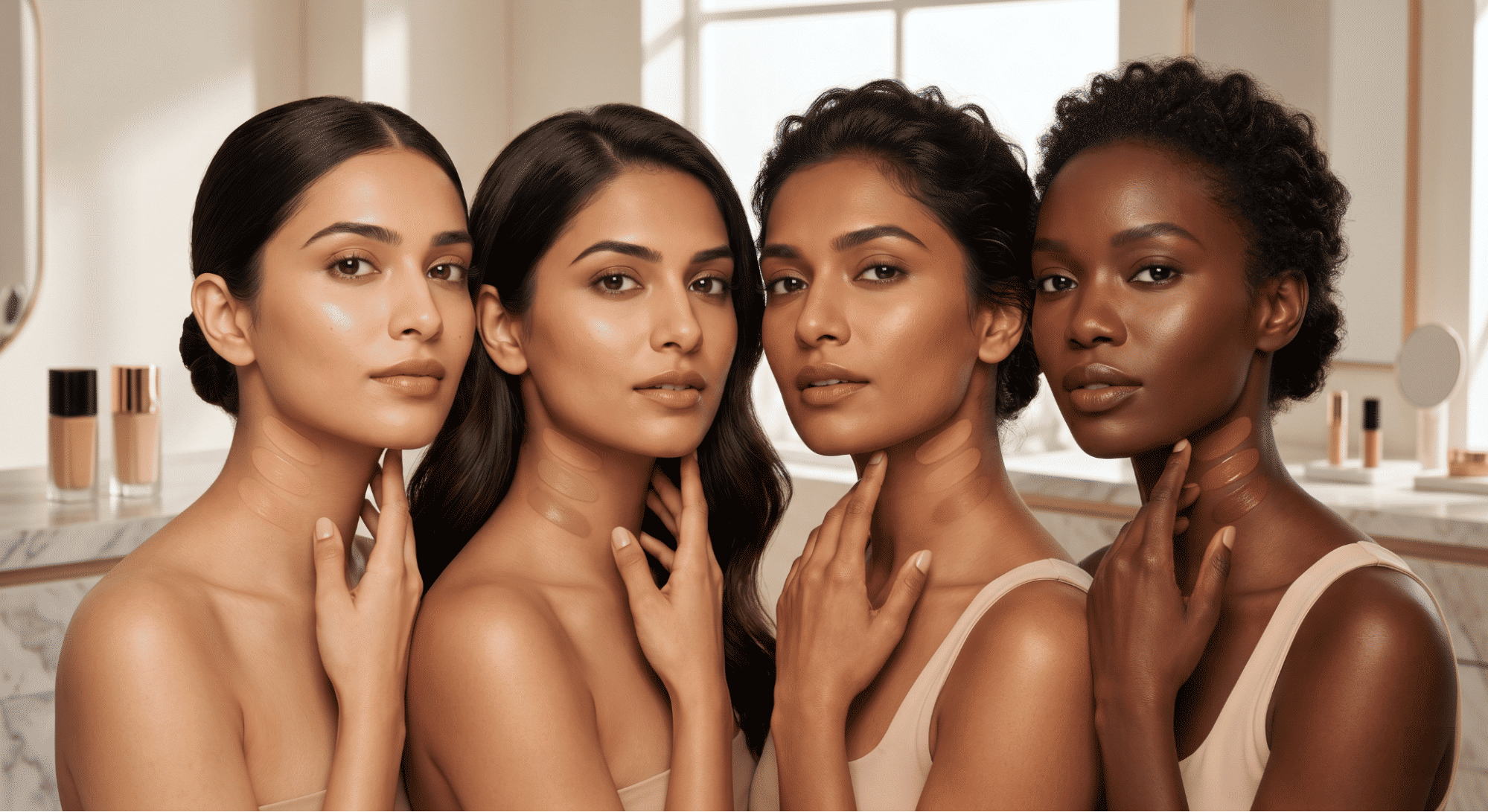
Finding the right foundation for Indian skin tones is usually less about coverage and more about undertones, texture and how the formula looks in real daylight.
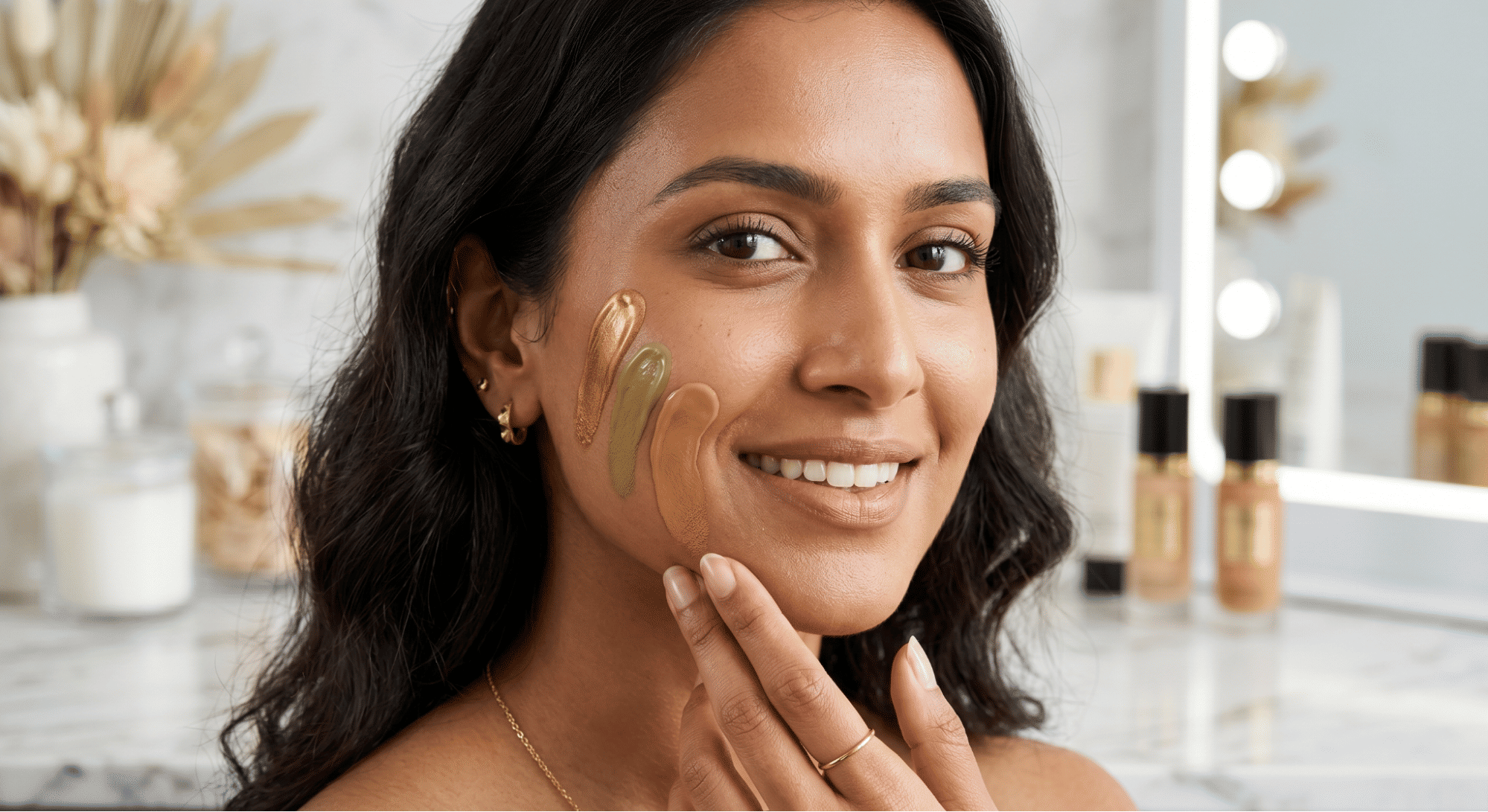
Finding foundation online honestly feels like a gamble sometimes.
A shade looks perfect in reviews, then suddenly in real life it:
- Turns orange after an hour
- Looks strangely grey
- Feels too pink against your neck
- Or somehow disappears into the wrong undertone completely
And with Indian skin tones, this happens a lot because undertones here are far more varied than most foundation charts suggest.
That's why people aren't only looking for coverage anymore.
They want foundation that actually looks believable on their skin.
In This Story:
- Why Undertones Matter More
- Why Foundation Looks Different In Daylight
- Why The Perfect Match Takes Time
- Why Warm Undertones Work Better
- Why Texture Matters More Now
- Choosing By Skin Type
- Why Foundation Oxidizes
- Why Foundation Finishes Feel Better
- Why Skin-Like Makeup Looks Better
- What Makes Foundation Look Balanced
- FAQs
Undertone Usually Matters More Than Shade Depth
This is where foundation matching goes wrong most often.
A foundation can technically be the correct depth and still look completely off because the undertone doesn't suit your skin.
Most Indian skin tones usually lean:
- Warm golden
- Olive
- Neutral-warm
- Slightly peachy
- Honey-toned
But many foundation formulas still pull:
- Too pink
- Too orange
- Too cool-toned
- Slightly grey
That's why finding the best foundation for Indian skin tones is usually more about undertone balance than simply choosing "medium" or "tan."
Foundations Look Different in Indian Lighting
This honestly matters more than people expect.
A foundation can look completely fine indoors and suddenly look:
- Too yellow
- Too pink
- Grey around the mouth
- Orange in sunlight
once you step outside.
That's especially noticeable in natural Indian daylight because it's usually brighter and warmer.
This is also where oxidation becomes obvious.
A lot of people test foundation on the jawline, walk outside once, and immediately realise the shade shifted after a few minutes.
The "Perfect Match" Usually Isn't Invisible Immediately
This surprises people.
Foundation almost always looks slightly noticeable right after applying because:
- It's freshly blended
- The formula hasn't settled yet
- Oxidation hasn't happened yet
The real test is usually after 15–20 minutes.
That's when you can tell if the shade:
- Blends naturally into your skin
- Turns too warm
- Looks dull
- Pulls orange
- Starts looking grey around the face
Good foundation matching usually takes a little time.
Indian Skin Tones Usually Suit Balanced Warmth Better
This is why neutral-warm foundations work for many people.
Usually the most flattering shades include:
- Golden undertones
- Olive balance
- Warm beige tones
- Honey shades
- Caramel depth
That's generally what works best in most foundation for Indian skin conversations.
Very pink-based foundation often looks unnatural on warmer Indian undertones.
Texture Matters More Than Full Coverage Now
This is honestly a huge shift compared to older makeup trends.
People still want smoother-looking skin, but heavy full-coverage matte foundation isn't as popular for daily wear anymore.
Most people now prefer:
- Skin-like finishes
- Lightweight formulas
- Flexible texture
- Natural matte or satin finishes
- Breathable coverage
Especially in Indian weather where thick foundation starts feeling uncomfortable quickly.
Choosing By Skin Type
Usually:
| Skin Type | What Often Feels Better |
|---|---|
| Oily skin | Soft matte foundation |
| Dry skin | Hydrating or satin finish |
| Combination skin | Natural skin-like finish |
| Humid weather skin | Lightweight formulas |
| Dehydrated skin | Flexible satin textures |
That's why shade matching alone isn't enough anymore.
Finish and texture matter just as much.
Oxidation Is Still One of the Biggest Foundation Problems
Honestly, this frustrates almost everyone at some point.
Some foundations become:
- Darker
- More orange
- Slightly muddy
after mixing with:
- Skin oils
- Heat
- Humidity
- Air exposure
That's why testing foundation for a few minutes before deciding usually helps much more than checking it immediately after swatching.
Especially in Indian summers.
Foundation Finishes Have Become More Balanced Recently
Most newer formulas sit somewhere between fully matte and very dewy now.
Usually:
| Finish Type | What It Often Looks Like |
|---|---|
| Soft matte | Balanced smoother skin |
| Satin finish | Natural healthy glow |
| Serum foundation | Lightweight skin-like texture |
| Natural matte | Less flat than old matte formulas |
| Dewy finish | Fresher but shinier |
Most people now prefer something between:
- Flat matte makeup and
- Overly glowy foundation
because balanced finishes usually look more natural daily.
The Best Foundation Usually Doesn't Look "Perfect" Up Close
And honestly, that's completely normal.
Real skin still has:
- Texture
- Pores
- Movement
- Slight unevenness
Foundations that look extremely flawless in videos often look:
- Heavy in daylight
- Obvious up close
- Dry after several hours
That's why natural-looking foundation became much more popular recently.
Skin-like makeup usually feels more believable in real life.
A Good Foundation Match Makes Your Whole Face Look More Balanced
That's honestly the biggest difference.
When the undertone and finish work properly:
- Skin looks fresher
- Makeup blends naturally into the neck
- Nothing looks grey or orange
- The face feels more even overall
You stop noticing the foundation itself.
And honestly, that's usually the sign the match is right.
Frequently Asked Questions
-
What is the best foundation for Indian skin tones?
Usually foundations with warm, golden, olive or neutral-warm undertones work best on Indian skin.
-
Why do foundations sometimes look grey on Indian skin?
Often because the undertone is too cool, too pink or too light for the skin.
-
Which foundation finish works best in Indian weather?
Soft matte, natural matte and satin finishes usually wear most comfortably in Indian climates.
-
Why does foundation turn orange later?
Some formulas oxidize after reacting with skin oils, heat and air exposure.
-
How do I find my undertone?
Warm undertones usually suit golden shades, while olive undertones often suit slightly muted warm or neutral foundations better.