In This Story:
A foundation can seem like a perfect match in the bottle and still look completely wrong once it's on your face. Sometimes it turns orange by midday, looks slightly grey around the mouth, or feels too pink compared to your neck. That's because finding the right foundation isn't just about choosing a light, medium, or deep shade. For Indian skin tones, undertones often make a much bigger difference than people realize.
If you've ever bought a foundation that looked flawless online but somehow felt off in real life, you're definitely not alone. Foundation matching can be surprisingly tricky, especially because Indian skin tones come with a wide range of warm, olive, neutral, and golden undertones that aren't always represented accurately in shade charts.
The good news is that once you understand what to look for, choosing the right foundation becomes much easier.
Undertones Usually Matter More Than Skin Depth
This is where most foundation mistakes happen.
A foundation can be the exact depth of your skin and still look unnatural because the undertone doesn't match. That's why two people with similar skin tones can end up wearing completely different foundation shades.
Many Indian skin tones naturally lean towards warm golden, olive, neutral-warm, or slightly peachy undertones. However, a lot of foundations still pull too pink, too orange, or even slightly grey once applied. When that happens, the foundation doesn't blend naturally into the skin, even if the depth seems correct.
That's why finding the right foundation shade usually starts with understanding your undertone first and your shade depth second.
Swatching Foundation on Your Hand Usually Doesn't Tell the Full Story
Most of us have done it at some point—testing foundation on the back of the hand and hoping for the best.
The problem is that your hands rarely match your face exactly. They're often more tanned, darker, lighter, or simply exposed to different amounts of sunlight throughout the year.
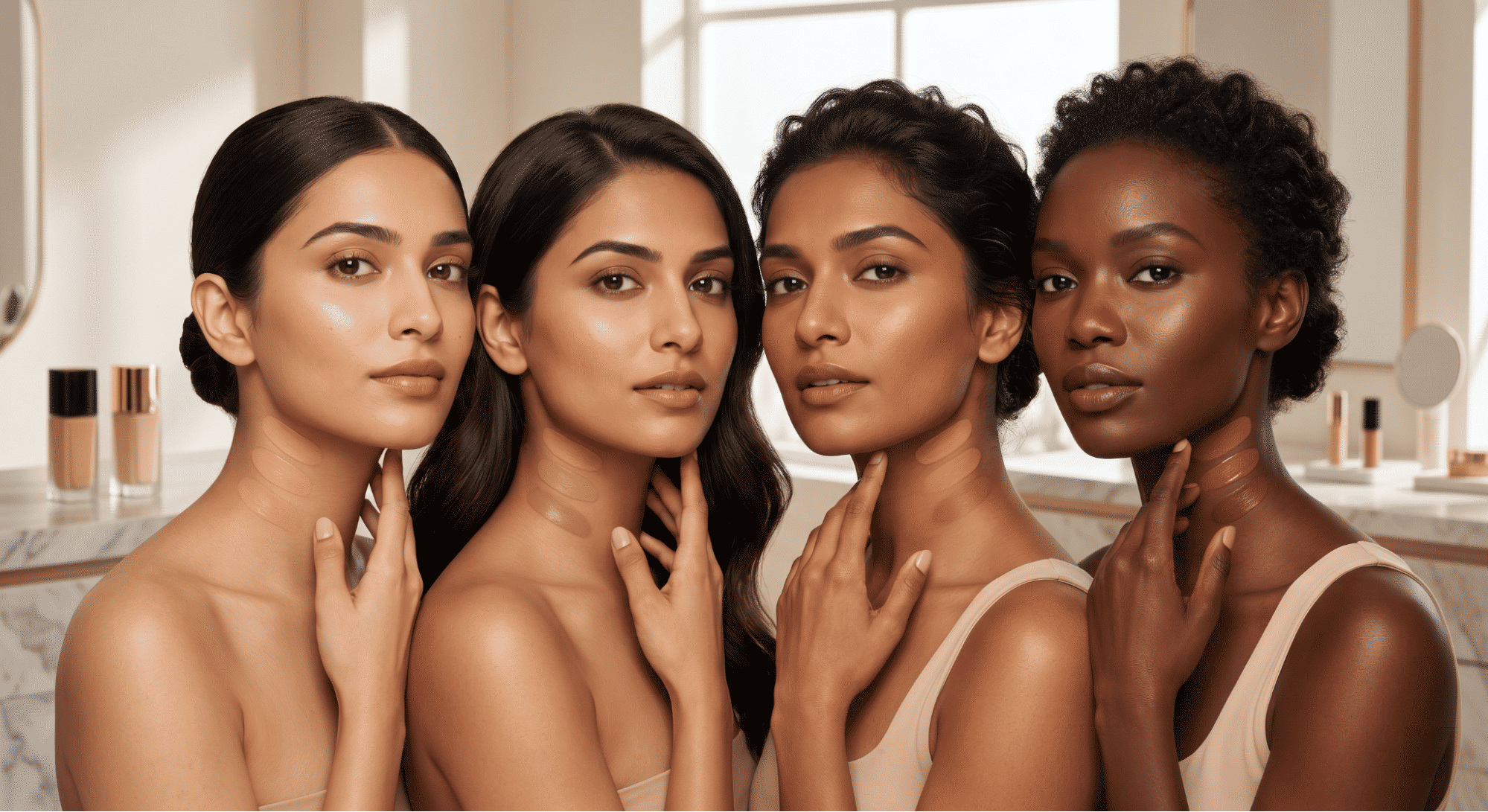
That's why makeup artists usually recommend testing foundation closer to the jawline, lower cheek, or neck area instead. The goal isn't to perfectly match one tiny section of skin. It's to create a seamless transition between your face, neck, and chest so everything looks balanced together.
Natural Daylight Reveals the Truth
Foundation shopping can feel easy inside a store and confusing the moment you step outside.
A shade that looked perfect under bright indoor lighting can suddenly appear too yellow, too pink, or oddly ashy once it hits natural daylight. That's why checking foundation near a window or stepping outside for a few minutes can make a huge difference.
A good foundation match shouldn't leave a visible line around the jaw. Instead, it should blend into the skin so naturally that you barely notice where the foundation starts and ends.
When Foundation Looks Grey or Orange, Undertones Are Usually the Problem
This is one of the most common frustrations for Indian skin tones.
A foundation often looks grey when it's too cool-toned, slightly too light, or missing the warmth and olive balance that your skin naturally has. On the other hand, if it starts looking orange after a few hours, it could be oxidizing or simply be warmer than your skin tone to begin with.
That's why it's always worth waiting 10–15 minutes after applying a shade before deciding whether it works. Foundations can change slightly once they settle and interact with the skin.
Your Neck Matters More Than You Think
Many people focus entirely on matching their face, but that can sometimes create an obvious difference between the face and neck.
Your face naturally experiences more redness, pigmentation, tanning, and unevenness than other areas. Because of that, matching only the face can occasionally make foundation look disconnected from the rest of your complexion.
The most natural-looking shades usually sit somewhere between your face, neck, and chest tones. That creates a balanced result that looks much more believable in daylight.
Different Undertones Usually Suit Different Foundation Families
While everyone's skin is unique, certain undertones often pair well with specific foundation tones.
| Undertone | Foundation Tones That Often Work Well |
|---|---|
| Warm | Golden, honey, warm beige |
| Olive | Olive-neutral, muted warm tones |
| Neutral | Balanced beige shades |
| Peachy-Warm | Soft golden-peach tones |
Very pink-based foundations can sometimes appear unnatural on warmer Indian skin tones, which is why many people gravitate toward golden or neutral-warm shades instead.
One Foundation Shade Doesn't Always Work All Year
This surprises a lot of people initially.
Skin tone naturally changes throughout the year due to sun exposure, tanning, weather shifts, and seasonal changes. A shade that matches perfectly during winter might suddenly feel too light in summer.
That's why many makeup lovers eventually keep two foundation shades—one for warmer months and another for cooler months. Mixing them when needed often creates the most natural match throughout the year.
Foundation Finish Can Change How a Shade Appears
This is something people often overlook.
The exact same shade can look slightly different depending on the finish because different textures reflect light differently.
Matte foundations can sometimes appear a little lighter on the skin, while dewy formulas may look deeper or warmer because they reflect more light. Satin finishes often sit somewhere in the middle, which is one reason they tend to look very natural in daylight.
So if a shade looks different than expected, the finish may be influencing the result too.
Online Swatches Are Helpful, But They're Not Perfect
Buying foundation online has become much more common, but swatches can still be misleading.
Lighting, camera settings, filters, and editing can all affect how a shade appears on screen. That's why it's usually helpful to look at multiple swatches, compare reviews from people with similar skin tones, and check photos taken in natural daylight whenever possible.
The more references you see, the easier it becomes to predict how a shade might look in real life.
The Best Foundation Match Almost Disappears Into the Skin
That's probably the simplest way to describe a good foundation match.
You don't notice a visible jawline line. Your face and neck look balanced. There's no obvious grey cast or orange tint. And when you step into natural daylight, your skin still looks like your skin—just a little more even.
At that point, people notice your complexion, not the foundation sitting on top of it.
And honestly, that's usually the sign you've found the right shade.
Frequently Asked Questions
-
How do I choose the right foundation shade for Indian skin?
Start by identifying your undertone first, then choose a shade depth that closely matches your skin.
-
Why does foundation look grey on Indian skin?
This usually happens when the undertone is too cool, too light, or lacks the warmth and olive balance present in your skin.
-
Should foundation match my face or my neck?
The most natural result is usually achieved by matching somewhere between your face and neck rather than focusing on one area alone.
-
Why does foundation turn orange after a few hours?
Some formulas oxidize after interacting with skin oils, heat, and air exposure, causing them to appear darker or warmer.
-
What undertones are most common in Indian skin tones?
Warm golden, olive, neutral-warm, and slightly peachy undertones are among the most common.
-
How should I test foundation properly?
Apply a small amount along the jawline or lower cheek and check it in natural daylight after allowing it to settle for a few minutes.
-
Can one foundation shade work all year?
Not always. Many people find that different seasons require slightly different shades due to tanning and changes in skin tone.
-
Which foundation finish looks most natural on Indian skin?
Soft matte, satin, and skin-like natural finishes tend to look the most balanced and realistic in everyday lighting.