Healthy hair doesn't have to come from expensive products. In many cases, simple routines followed consistently work better than complicated routines packed with trendy products.
Healthy hair doesn't have to come from expensive products.
Spend a few minutes online and it's easy to believe that better hair requires a long list of treatments, masks, serums, oils, and supplements. But take a closer look at people with consistently healthy-looking hair, their routines are often much simpler than you'd think.
The reality is that hair usually responds better to consistency than complexity.
A few affordable products used regularly can often do more than a cabinet full of products that get replaced every few weeks.
In This Story:
Start with a shampoo that works for your scalp
One thing that often gets overlooked is the scalp itself.
People naturally focus on the hair they can see, but the condition of your scalp can influence how your hair looks and feels over time.
If your scalp regularly feels:
- oily
- itchy
- uncomfortable
- heavy from product buildup
your hair may never feel completely fresh, regardless of what you're using on the lengths.
You don't need the most expensive shampoo available.
A simple shampoo that cleans well without leaving your hair feeling stripped is usually a good place to start.
The goal isn't to make your scalp squeaky clean. It's to keep it comfortable and balanced.
Don't underestimate conditioner
Conditioner is probably one of the most overlooked steps in a budget-friendly routine.
A lot of people are happy to spend money on treatments but treat conditioner like an optional extra. In reality, it's often doing more daily work than people realize.
Regular conditioning can help:
- reduce tangles
- improve softness
- make hair easier to manage
- reduce friction between strands
- help protect hair from everyday wear and tear
Most of the time, focusing on the mid-lengths and ends is enough.
Your roots usually don't need much help in the moisture department.
Hair oiling doesn't have to be complicated
Hair oiling has stayed popular for years because many people genuinely enjoy the results.
That doesn't mean you need a complicated routine or expensive oils.
For some people, a simple oiling session once a week helps hair feel:
- softer
- smoother
- easier to detangle
- more manageable after washing
You also don't have to leave oil in overnight if that doesn't suit you.
Even applying it for an hour before shampooing can be enough for many hair types.
Be careful with wet hair
This sounds like a small thing, but it can make a noticeable difference over time.
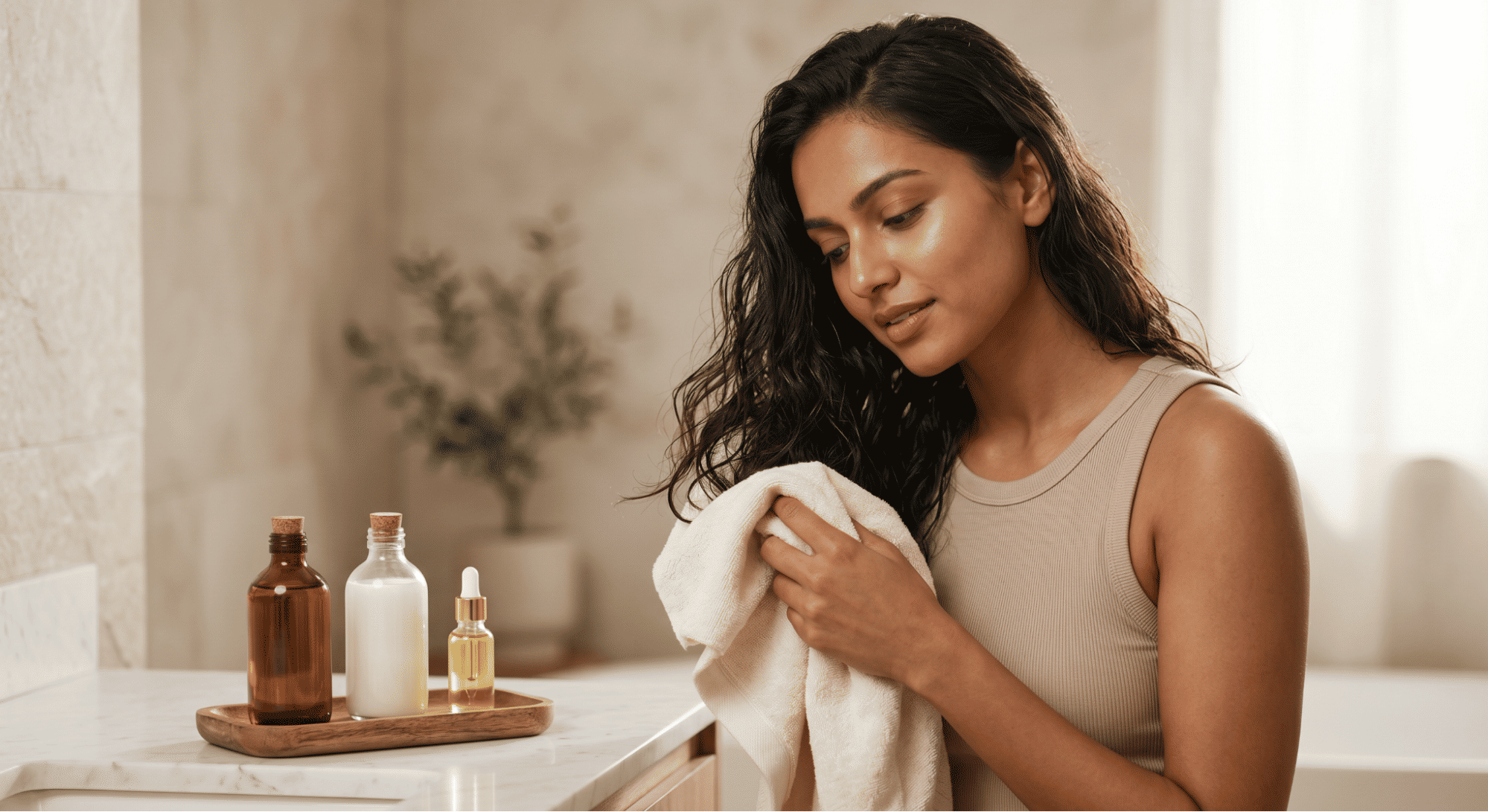
Hair is often more vulnerable when it's wet. That's why breakage tends to happen during drying, brushing, and detangling.
A few habits that can help:
- gently squeeze out water instead of rubbing aggressively
- detangle slowly
- avoid pulling through knots
- wait before putting hair into tight styles
They dramatic changes, but they can help to avoid unnecessary breakage.
And less breakage often means hair looks thicker and healthier over time.
Not every trend needs to become part of your routine
Hair trends move fast. One month it's rosemary oil. Then it's scalp serums. Then it's a new ingredient that suddenly seems to be everywhere. Some trends are useful. Others are mostly marketing.
A lot of people end up spending money because they feel like they're missing something important. But hair usually responds better to routines that stay consistent than routines that change every few weeks.
Simple doesn't mean ineffective. In many cases, simple is exactly what works.
A simple budget-friendly hair routine
You don't need ten different products to maintain healthy-looking hair.
For many people, a routine like this is enough:
| Step | What It Does |
|---|---|
| Gentle Shampoo | Cleans the scalp and removes buildup |
| Conditioner | Softens and protects hair lengths |
| Weekly Hair Oiling (Optional) | Improves softness and manageability |
| Leave-In Product (If Needed) | Helps reduce frizz |
| Heat Protectant | Helps reduce styling damage |
For everyday haircare, that covers most of the basics.
Everyday habits matter more than people think
Haircare isn't only about what you apply.
A lot of the things that influence hair health happen outside the bathroom.
Things like:
- eating enough protein
- staying hydrated
- managing stress
- getting enough sleep
- maintaining a balanced diet
may not sound exciting, but they can influence how your hair looks over time.
Hair grows slowly, which is why patience is often part of the process.
Trims still have a place
A haircut won't speed up hair growth.
That's one of the most common myths in haircare.
What trims can do is help hair look healthier by removing damaged ends.
Split ends tend to:
- feel rough
- tangle easily
- make hair appear thinner
- continue splitting further up the strand
Sometimes a small trim can make hair look noticeably healthier without changing anything else in your routine.
Weather affects your hair more than you might expect
This becomes obvious once you've gone through a few seasons.
During summer:
hair may become oily more quickly.
During monsoon:
frizz often becomes the main complaint.
During winter:
dryness becomes more noticeable for many people.
In air-conditioned environments:
hair can sometimes feel less flexible and slightly dehydrated.
You don't have to have a brand new routine every season, but a few tweaks can go a long way.
Healthy hair isn't perfectly smooth all the time
Even healthy hair can have:
- texture
- movement
- occasional frizz
- flyaways
That's completely normal.
The goal isn't perfection. It's hair that feels manageable, comfortable, and healthy overall.
The best hair routine is usually the one you can stick with
This is probably the most important thing to remember.
You don't need a luxury routine.
You don't need every trending product.
And you definitely don't need to spend a fortune to take care of your hair.
A handful of affordable products used consistently often delivers better results than constantly switching between new products.
Healthy hair is usually built through habits that you can maintain month after month.
That's what tends to make the biggest difference.
Frequently Asked Questions
-
What is the most important step in a haircare routine?
For many people, maintaining a healthy scalp and using conditioner regularly are two of the most important basics.
-
How often should I oil my hair?
It depends on your hair type and preference. Many people oil once or twice a week, while others choose not to oil at all.
-
How long does it take to see healthier hair?
Some improvements in softness and manageability can appear within a few weeks, while larger changes often take several months.
-
Can affordable hair products really improve hair health?
Yes. A simple routine built around shampoo, conditioner, and good hair habits can support healthier-looking hair without a large budget.
-
Is hair oiling necessary for healthy hair?
Not necessarily. Many people enjoy the benefits of hair oiling, but healthy hair can still be maintained without it.
-
How many hair products do I actually need?
Most people can build a solid routine with a shampoo, conditioner, and one or two additional products based on their specific needs.