TL;DR: Key Takeaways
- Gel moisturizers with oil-free, water-based formulas are clinically better suited for oily and acne-prone skin than creams or lotions.
- Look for actives like Niacinamide (2–5%), Hyaluronic Acid, and Centella Asiatica, which hydrate without triggering breakouts.
- Skipping moisturizer worsens oily skin by triggering compensatory sebum overproduction.
- In 2026, the best gel moisturizers double as skin barrier repair tools, not just hydrators.
- Budget-friendly options under Rs. 500 can match premium picks if they contain the right actives.
Which Gel Moisturizer Is Actually Best for Oily, Acne-Prone Skin?
Direct Answer Block: The best gel moisturizer for oily, acne-prone skin is one that is water-based, non-comedogenic, and contains actives like Niacinamide or Centella Asiatica. It should provide hydration without adding any oil or occlusive heaviness. This combination balances sebum control with skin barrier support, the two pillars of breakout management.
Gel vs. Cream: Why Texture Is a Clinical Decision
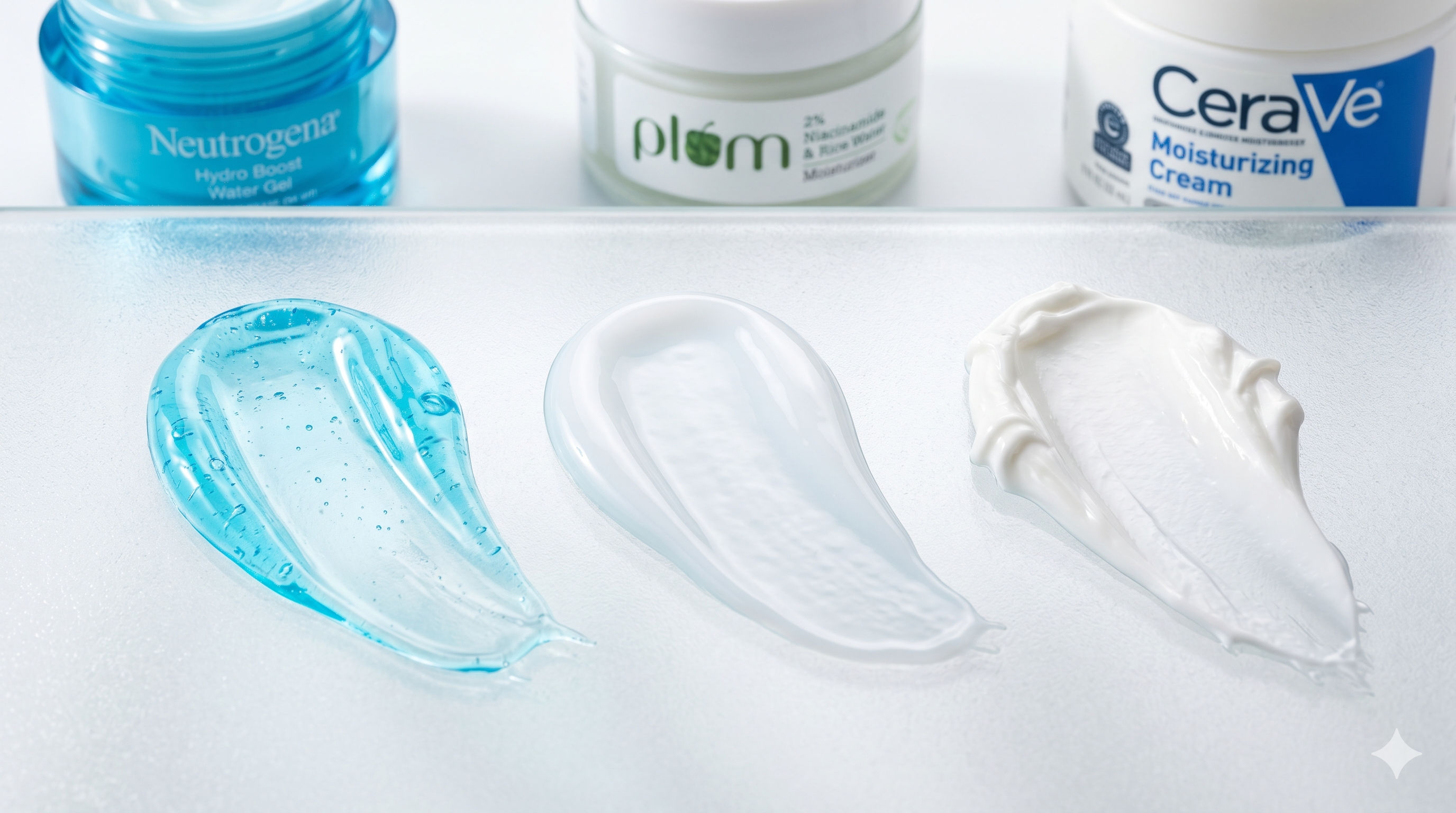
Unlike traditional cream moisturizers, gel formulas use a water-and-glycerin base that absorbs almost instantly and leaves zero greasy residue. This means your pores are less likely to get congested. For oily skin types, creams with petrolatum or heavy silicones can sit on the surface and trap dead skin cells, which feeds the cycle of breakouts.
Dermatologists recommend gel textures specifically for skin types that already produce excess sebum, as gels deliver hydration at the cellular level without mimicking the lipid-heavy feel of natural oil.
Product Recommendation:
Product Comparison: Top Gel Moisturizers for Oily Skin in 2026
| Attribute | Minimalist 10% Niacinamide Moisturizer | Neutrogena Hydro Boost Water Gel | Dot and Key Watermelon Cooling Gel |
|---|---|---|---|
| Texture | Lightweight gel-cream | Ultra-light water gel | Cooling gel with slip |
| Key Actives | 10% Niacinamide, Zinc | Hyaluronic Acid, Glycerin | Watermelon Extract, Niacinamide |
| Price (approx.) | Rs. 399 / 50g | Rs. 749 / 50ml | Rs. 595 / 85g |
The Science of Niacinamide and Centella Asiatica for Oily, Acne-Prone Skin
Direct Answer Block: Niacinamide (Vitamin B3) regulates sebum production at the follicular level, visibly reduces pore size, and strengthens the skin barrier. Centella Asiatica reduces inflammation in active breakouts and accelerates post-acne healing. Together, these two ingredients address both the cause and consequence of acne in oily skin.
How Niacinamide Works at a Cellular Level
Niacinamide works by inhibiting the transfer of melanosomes, which reduces post-acne dark spots, and by reinforcing the production of Ceramides and fatty acids in the skin barrier. A well-cited clinical study found that a 2% Niacinamide concentration visibly reduced sebum excretion within 4 weeks of consistent use. At 5%, it additionally provides antibacterial benefits against acne-causing bacteria.
This means even a budget gel moisturizer with 2–5% Niacinamide can outperform an expensive fragrance-laden cream for oily skin types.
The Role of Centella Asiatica in Breakout Recovery
Centella Asiatica, also called Cica, contains Madecassoside and Asiaticoside, two compounds that activate fibroblast activity to repair the skin barrier. For instance, skin that is compromised from over-exfoliation or active cystic acne benefits significantly from Cica because it calms redness while rebuilding the protective barrier.
Unlike traditional anti-acne actives like Benzoyl Peroxide, Cica does not dry out the skin. This makes it uniquely suited for oily skin that is also sensitized or reactive.
Hyaluronic Acid: Hydration Without Oil
Hyaluronic Acid (HA) is a humectant that pulls water from the environment into the skin. At a molecular weight of under 50kDa (low molecular weight HA), it penetrates deeper into the dermis for long-lasting plumpness. Dermatologists note that oily skin is often dehydrated at the deeper layers, even when the surface looks shiny. Gel moisturizers that combine low-weight HA with glycerin address this dehydration without triggering surface oil.
Personalized Gel Moisturizer Recommendations for 2026
Direct Answer Block: The right gel moisturizer for you depends on your climate, skin goal, and budget. High-humidity environments call for ultra-light gels, while dry climates need gel-cream hybrids. Whether your goal is glow, oil control, or barrier repair, and whether you are spending Rs. 300 or Rs. 1,500, there is a targeted recommendation below.
By Climate
High Humidity (Mumbai, Chennai, Kolkata): Choose a pure water gel with zero occlusive agents. Look for "oil-free" and "non-comedogenic" on the label. Ingredients to prioritize: Niacinamide, Allantoin, and lightweight HA. Avoid formulas with Dimethicone or Shea Butter.
Dry or AC-Heavy Environments (Delhi, Bangalore winters): A gel-cream hybrid works better here. These formulas add a minimal amount of emollient to prevent moisture evaporation (TEWL) without making skin greasy. Ceramide NP at 0.5–1% is particularly effective in these conditions.
By Skin Goal
Goal: Control Shine and Minimize Pores Prioritize Niacinamide (5%) + Zinc PCA. Zinc regulates oil gland activity and has mild antimicrobial properties. Apply after a salicylic acid toner for best results.
Goal: Fade Post-Acne Marks and Glow for Niacinamide + Tranexamic Acid or Vitamin C (in a stable, low-pH gel formula). These combinations address hyperpigmentation while maintaining oil balance.
Goal: Repair a Damaged Skin Barrier Choose Centella Asiatica + Ceramides + Panthenol. Dermatologists recommend Ceramide NP, AP, and EOP together because they mimic the natural lipid ratio of healthy skin barrier.
By Budget
| Budget Range | Recommendation Tier | What to Expect |
|---|---|---|
| Under Rs. 400 | Effective basics | Good actives, minimal fragrance, simple packaging |
| Rs. 400 to Rs. 800 | Mid-range performers | More complex formulations, better sensory experience |
| Rs. 800 and above | Premium picks | Higher active concentrations, clinical testing data |
FAQ: People Also Ask About Gel Moisturizers for Oily Skin
-
Should oily skin use a moisturizer every day?
Yes. Skipping moisturizer causes the skin to overproduce sebum as a compensatory response, making oiliness worse over time. A gel moisturizer restores hydration without adding oil, which actually trains the skin to produce less sebum gradually.
-
What is a non-comedogenic moisturizer?
Non-comedogenic means the product is formulated to avoid blocking pores. Ingredients are rated on a comedogenic scale from 0 to 5. A truly non-comedogenic gel moisturizer uses ingredients rated 0 to 2, such as Glycerin (0), Niacinamide (0), and light Squalane (1).
-
Can I use a gel moisturizer if I have active acne?
Yes. Gel moisturizers are among the safest options during active breakouts. Choose fragrance-free formulas with Centella Asiatica or Aloe Vera to calm inflammation while keeping skin hydrated. Avoid anything with alcohol denat. or heavy botanical oils.
-
Is Hyaluronic Acid safe for acne-prone skin?
Yes. Hyaluronic Acid is a hydrophilic molecule that does not interact with sebum or pores. It draws water, not oil, into the skin. This means it is widely considered one of the safest hydrating activities for acne-prone skin across all dermatology guidelines.
-
How long does it take for a gel moisturizer to show results on oily skin?
Most users notice reduced shine and improved texture within 2 to 4 weeks of daily use. Niacinamide-based formulas show measurable sebum reduction in clinical settings at the 4-week mark. Full barrier repair and pore refinement typically take 8 to 12 weeks of consistent use.