Dry lips, thick layers and rushing the setting process can quickly make liquid lipstick look uneven or flaky through the day. That's why lighter layers, simple lip prep and softer matte formulas usually help liquid lipstick wear more smoothly and comfortably for longer.
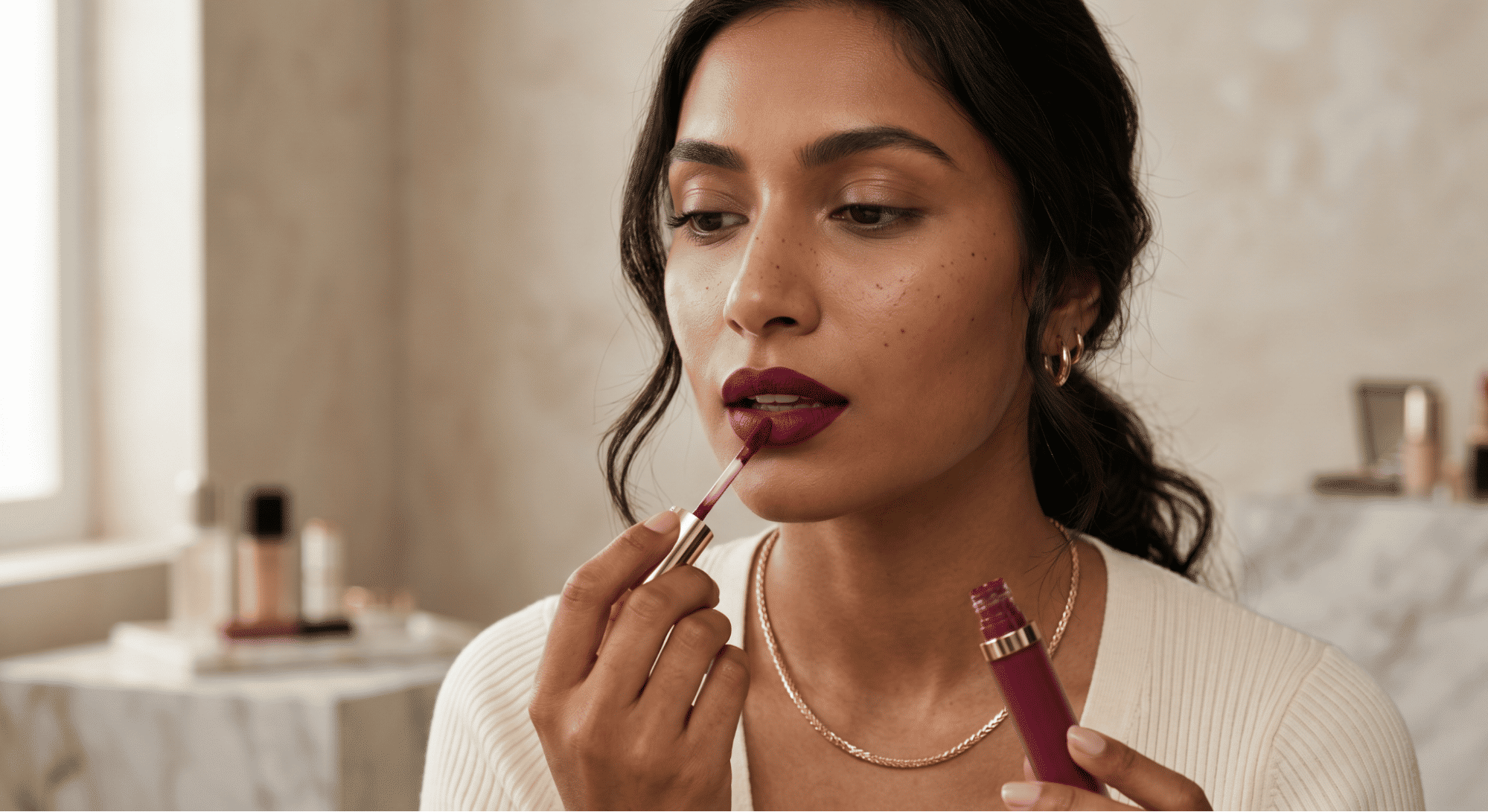
Liquid lipstick always looks effortless when someone else applies it. Clean edges, smooth matte finish, no smudging anywhere. Then you try it yourself and somehow within an hour the center starts cracking, corners look messy, dry patches become obvious, and the lipstick starts separating unevenly.
And once that happens, it's hard not to blame the formula immediately. But honestly, a lot of liquid lipstick problems usually come down to application habits more than the lipstick itself. Small things make a much bigger difference than people expect.
In This Story:
Dry Lips Usually Cause Most Liquid Lipstick Problems
This is probably the biggest reason liquid lipstick starts looking uneven. Liquid lipstick holds onto texture much more strongly than regular lipstick. So if lips already feel slightly flaky, dry around the center, or rough near the edges, the formula catches onto those areas almost instantly. That's usually where cracking and patchiness begin.
Even expensive formulas struggle on very dry lips because matte liquid textures naturally emphasise texture more.
Thin Layers Always Wear Better
This part changes everything. Because liquid lipstick feels lightweight initially, people often keep layering more product thinking it will look smoother. But thick layers usually crack faster, feel heavier, smudge more before setting, and separate unevenly during the day.
One thin, even layer almost always looks cleaner and lasts better. Especially with matte liquid lipstick, long-wear formulas, and transfer-proof textures. Usually, less product gives a smoother result.
Lip Prep Should Stay Simple
A lot of people either skip prep completely or overdo it. Honestly, liquid lipstick prep works best when it stays minimal. Usually enough to gently remove flaky skin, apply a light lip balm, let it settle briefly, and wipe away excess balm before lipstick.
That gives lips enough comfort without making the surface slippery. Because if lips feel too oily underneath, liquid lipstick struggles to set properly, stay in place, and wear evenly. So balance matters more than heavy hydration immediately before application.
Letting the Lipstick Set Properly Makes a Huge Difference
This is one of the most overlooked steps. Right after applying, liquid lipstick is still moving slightly on the lips. If you immediately press lips together, start layering more, talk constantly, or eat or drink quickly, the finish gets disturbed before it fully sets.
Even waiting quietly for about a minute helps the formula settle more evenly. Honestly, this small habit fixes more smudging issues than people realise.
The Center of the Lips Usually Cracks First
This happens because the inner part of the lips moves the most while talking, eating, or drinking. Heavy layers naturally start separating faster there.
A simple trick that often helps: apply slightly less product in the center area and focus most of the pigment on the outer lips. That usually creates more flexible wear and reduces visible cracking later. Small detail, but surprisingly noticeable.
Some Liquid Lipstick Formulas Are Naturally Drier
Not all liquid lipsticks behave the same way.
Usually:
| Formula Type | How It Often Feels |
|---|---|
| Mousse textures | Softer and lighter |
| Soft matte | More flexible |
| Ultra matte long-wear | Drier but longer lasting |
| Transfer-proof formulas | Less movement but tighter feel |
Usually, the more transfer-proof a formula becomes, the more drying it tends to feel after a few hours. That's the trade-off most long-wear matte lipsticks make.
Ingredients Affect Comfort More Than People Think
Comfortable liquid lipsticks usually balance pigment with flexibility.
| Ingredient | What It Usually Helps With |
|---|---|
| Silicones | Smooth application |
| Vitamin E | Helps softness |
| Lightweight oils | Improve flexibility |
| Waxes | Increase staying power |
| Powder-heavy formulas | Often feel drier |
Usually, softer flexible formulas crack less than ultra-flat matte formulas.
Weather Changes How Liquid Lipstick Behaves
This becomes obvious once seasons change. The exact same lipstick can suddenly feel comfortable during humid weather or extremely dry during winter.
Usually:
| Environment | What Often Happens |
|---|---|
| Dry weather | Cracking appears faster |
| Humid weather | Smoother wear |
| Winter | Lips become flaky quickly |
| Air-conditioned spaces | Matte formulas feel tighter |
So sometimes the formula didn't change—your lips simply became drier.
Adding More Lipstick Rarely Fixes Cracking
This is usually where liquid lipstick starts looking messy. Once the lipstick begins cracking, layering another thick coat on top usually emphasises texture more, creates patchiness, and feels heavier.
Usually, a cleaner fix works better: blot gently, smooth uneven edges lightly, and reapply a thin fresh layer instead. Less product almost always looks smoother.
Soft Matte Liquid Lipsticks Usually Feel Better Daily
Ultra-flat matte lips may look dramatic initially, but softer matte finishes usually wear more naturally, feel more flexible, fade more evenly, and look fresher throughout the day. And honestly, softer formulas tend to feel easier for everyday wear too.
Especially in Indian weather where dryness and humidity constantly change how makeup behaves.
When Liquid Lipstick Is Applied Well, It Stops Feeling High Maintenance
That's usually the biggest sign. Your lipstick doesn't crack constantly, doesn't smudge near the corners, feels fairly comfortable after hours, and fades naturally instead of breaking apart. You stop checking the mirror every twenty minutes because the lipstick simply sits properly.
And honestly, that comfortable wearable finish usually looks much better than extremely dry "perfect" matte lips anyway.
Frequently Asked Questions
-
How do I apply liquid lipstick smoothly?
Apply thin even layers on lightly prepped lips and allow the lipstick to set fully before pressing your lips together.
-
Why does my liquid lipstick crack?
Usually because of dry lips, thick application or very dry long-wear matte formulas.
-
How can I stop liquid lipstick from smudging?
Allow it to dry properly before eating, drinking or pressing your lips together.
-
Should I use lip balm before liquid lipstick?
Yes, but only a light amount. Too much balm can make liquid lipstick slide unevenly.
-
Why does liquid lipstick look patchy?
Dryness, flaky lips and thick product layers usually cause uneven application and fading.