The right blush shade can instantly make the face look fresher, warmer and more balanced, but the wrong undertone can easily look chalky or overly bright on the skin.
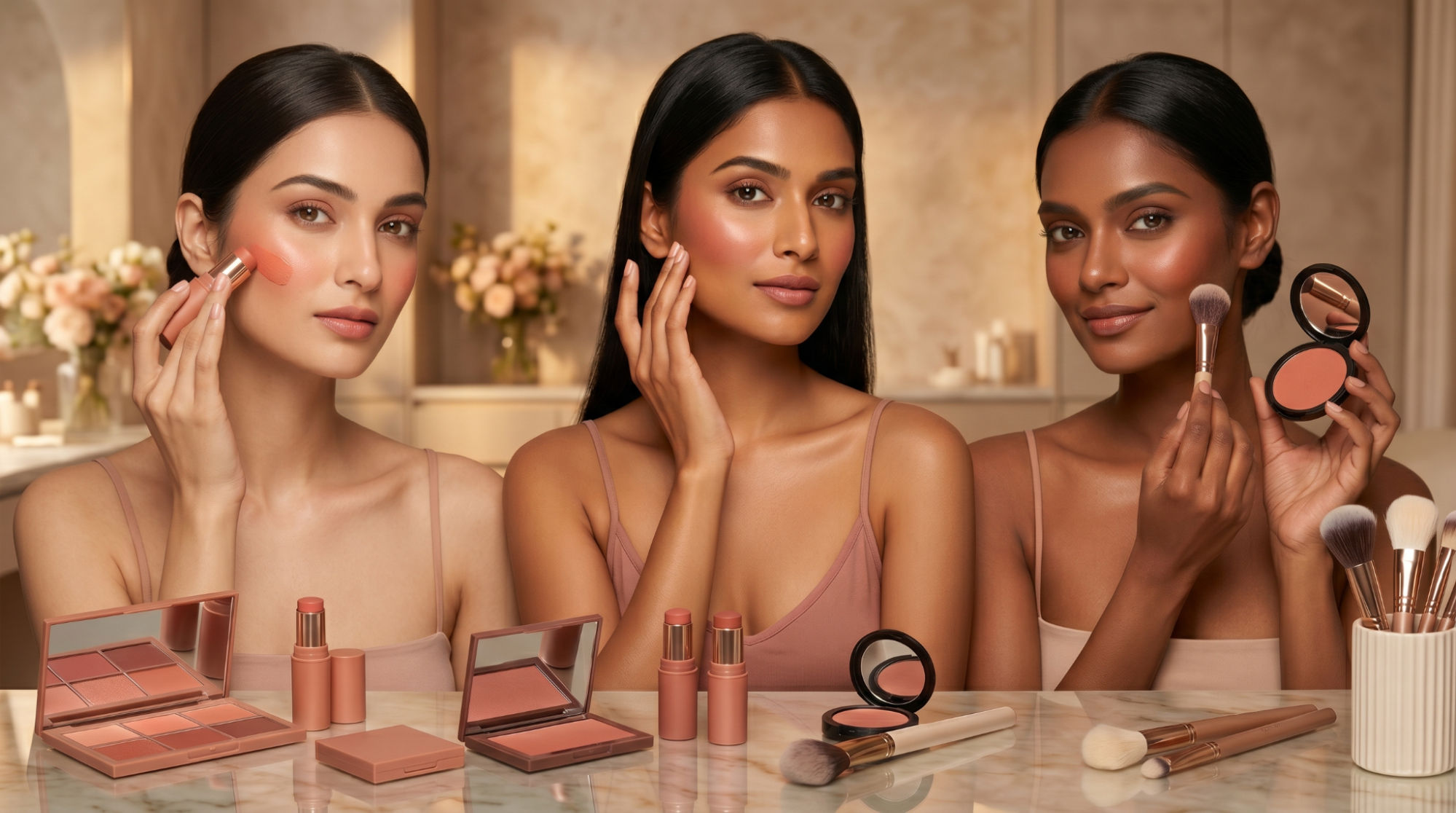
Choosing blush sounds easy until you actually start testing shades on your skin.
A color can look soft and beautiful in the pan, then suddenly appear too bright, too dull, too pink, or completely invisible after blending. And honestly, this happens quite often with Indian skin tones because many blush shades are created around lighter or cooler undertones.
That's why finding the right blush usually has less to do with trends and more to do with understanding undertones and warmth properly.
The best blush shade is usually the one that brings natural warmth back into the face without looking overly obvious.
In This Story:
Undertone changes how blush looks on the skin
This is usually where blush either works beautifully or feels completely wrong.
A blush shade can technically be pretty, but if the undertone clashes with your skin, it can make the face look:
- dull
- grey
- overly pink
- slightly chalky
Most Indian skin tones usually lean:
- warm golden
- olive
- neutral-warm
- peachy-warm sometimes
That's why warmer blush shades tend to blend more naturally into the skin.
Very pale blushes don't always work well on warmer skin tones
This happens especially on medium, olive, and deeper Indian skin tones.
Very light cool pinks or pastel blushes can sometimes:
- disappear completely after blending
- look powdery
- turn ashy on warmer undertones
- sit oddly on the skin instead of blending in
That's why richer blush tones usually look fresher and healthier.
Especially in daylight.
Dusky skin tones usually suit deeper blush shades beautifully
This is something people often realize after trying softer pink shades that barely show up.
Deeper skin tones usually look especially flattering with:
- terracotta blush
- berry tones
- rose-brown shades
- burnt peach colors
- cinnamon warmth
These shades tend to look naturally flushed instead of overly powdery.
Peach and warm rose blushes work for many Indian skin tones
This is probably why these shades stay popular every year.
Usually shades like:
- peach coral
- warm rose
- rosy brown
- terracotta peach
- muted coral
blend naturally into Indian skin without looking too cool or artificial.
They also tend to work well for daily makeup.
Blush intensity matters as much as shade
This part gets overlooked often.
Highly pigmented blush applied too heavily can quickly overpower the face, especially on warm undertones.
Usually better:
- apply lightly first
- blend gradually
- build color slowly
That almost always looks softer and more skin-like than applying too much at once.
Different blush textures change how color appears
The same shade can look completely different depending on the finish.
| Blush Texture | What It Usually Looks Like |
|---|---|
| Soft matte | More defined and smooth |
| Satin blush | Fresh natural glow |
| Cream blush | Softer skin-like warmth |
| Powder-heavy matte | Stronger and sometimes drier |
| Dewy blush | Fresher but slightly shinier |
Usually satin and cream textures make blush look softer and more natural on Indian skin.
Different skin depths usually suit different blush families
| Skin Tone Depth | Shades That Usually Work Well |
|---|---|
| Fair-warm skin | Peach pinks, soft coral |
| Medium skin | Rose peach, warm mauve |
| Olive skin | Terracotta rose, muted coral |
| Dusky skin | Berry, cinnamon, burnt peach |
Usually warmth helps blush blend more naturally into Indian skin tones.
Indian weather changes how blush wears
This becomes obvious very quickly during summer or winter.
| Condition | What Usually Looks Better |
|---|---|
| Humid weather | Soft matte or cream blush |
| Dry weather | Satin or creamy finishes |
| Winter | Richer warm tones |
| Peak summer | Lightweight natural blush |
Very dry powder blushes can sometimes look patchy during colder weather.
Blush should blend into the face, not sit separately on top
This is honestly the easiest way to tell if a blush shade suits you properly.
A good blush usually:
- adds warmth naturally
- blends softly into the skin
- doesn't overpower the makeup
- still lets skin look like skin
When the shade works, the face simply looks fresher and healthier overall.
The right blush shade makes the whole face look more balanced
That's usually the goal.
- Skin looks healthier
- Makeup feels softer
- The face looks brighter naturally
- Nothing looks too chalky or overly pink
The blush just melts naturally into the skin instead of standing out separately.
Frequently Asked Questions
-
What is the best blush shade for Indian skin tones?
Warm peach, rose, terracotta, coral, and berry shades usually work beautifully on Indian skin tones.
-
Which blush shades suit dusky skin best?
Burnt peach, berry, cinnamon, terracotta, and rose-brown shades usually look the most flattering.
-
Why does blush look chalky on my skin?
The blush may be too light, too cool-toned, or too powdery for your undertone.
-
Are pink blushes good for Indian skin?
Yes, especially warm pinks, rose shades, and muted coral-pinks.
-
Which blush finish looks most natural?
Soft matte, satin, and cream blush finishes usually blend most naturally into the skin.
-
Can olive skin tones wear peach blush?
Yes. Muted peach and terracotta-peach shades usually look especially flattering on olive undertones.
-
Why does blush disappear after blending?
The shade may be too light for your skin depth or too close to your natural undertone.
-
Is cream blush better for dry skin?
Usually yes, because cream textures tend to look softer and less patchy on dry skin.