In This Story:
- Why Primer And Strobe Cream Feel Different
- Why Primer Usually Goes First
- Why Strobe Cream First Feels Slippery
- Why You Don’t Need Glow Everywhere
- Why Texture Matters More
- Choosing By Skin Type
- How Foundation Changes The Finish
- Primer And Strobe Cream Pairings
- How Weather Changes The Finish
- Why Natural Glow Looks Better
- When Makeup Feels More Balanced
- FAQs
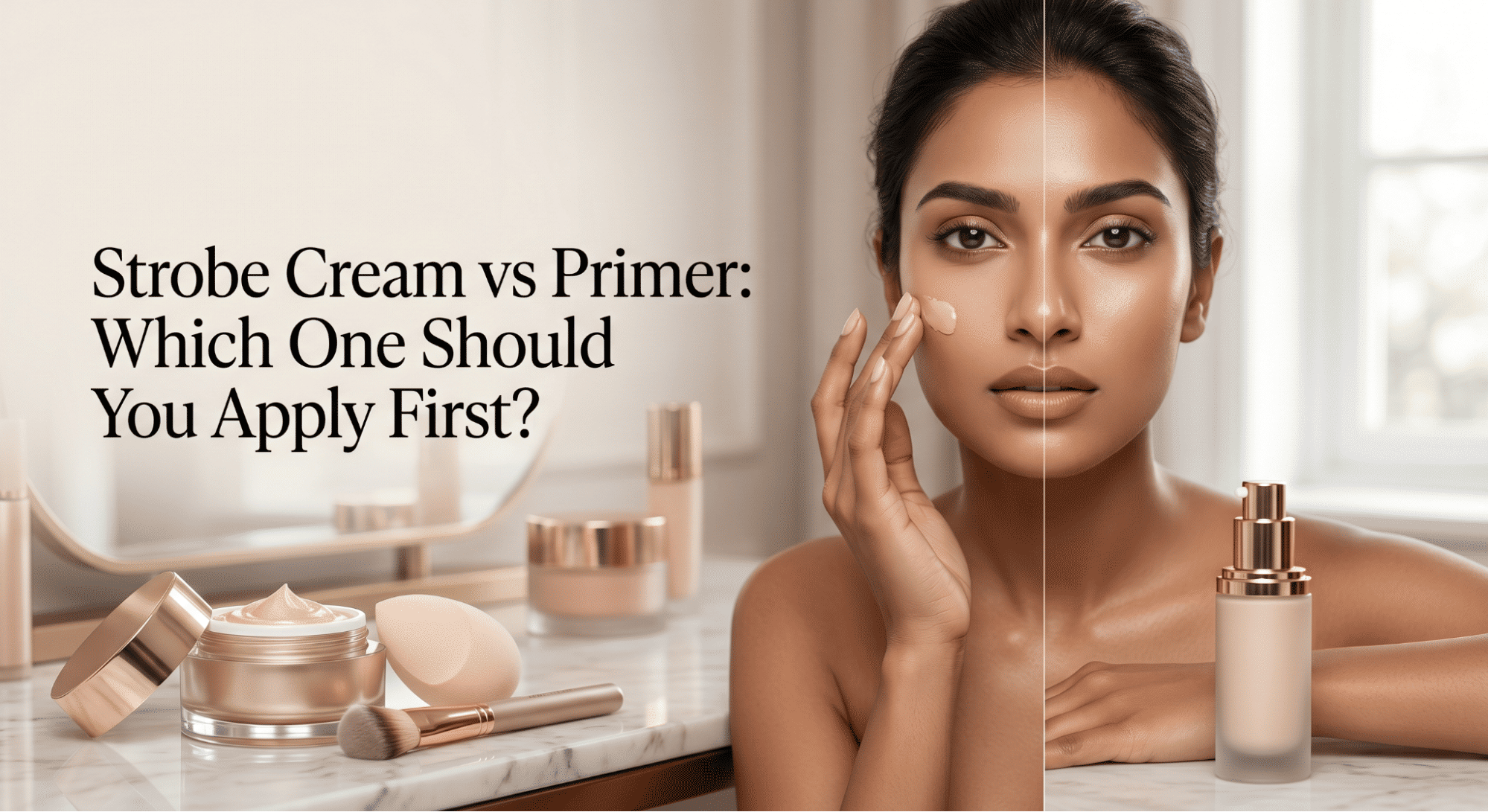
Primer helps smooth the skin and create a better base for foundation, while strobe cream adds glow exactly where you want light to show through. That’s why many people now apply primer first and then use strobe cream on the high points of the face for makeup that looks fresh, balanced and naturally radiant.
Strobe cream and primer can feel confusing once they both end up in your makeup routine. They both go on before foundation. They both affect how your base looks. And it’s very normal to wonder which one actually belongs first.
For most makeup routines, primer usually sits closer to the skin, while strobe cream goes on after to add glow where you want light to come through. That order tends to keep makeup smooth while still letting glow show through naturally.
But like most makeup steps, texture and skin type can change what feels best.
Primer and strobe cream do different jobs
This usually clears up the confusion quickly.
Primer is mainly there to:
- smooth the skin
- blur texture slightly
- help foundation wear longer
- create a more even surface
Strobe cream is more about:
- adding radiance
- brightening dull skin
- creating glow under makeup
- helping skin look fresher
So one helps prep the base. The other adds light. That’s why they often work well together.
Primer usually goes on first
For most routines, primer comes before strobe cream.
Primer sits directly on the skin first and creates a smoother surface.
Then strobe cream can go on top in the areas where you want glow:
- cheekbones
- forehead high points
- bridge of the nose
- sometimes the chin
That layering helps foundation look even while still letting radiance come through.
Using strobe cream first can sometimes feel slippery
This happens more often than people expect.
If strobe cream goes on first and primer gets layered over it, the skin can sometimes feel:
- slippery
- overly shiny
- uneven underneath foundation
And depending on the formulas, some of the glow may disappear anyway. That’s why primer first usually feels easier and more balanced.
You don’t need strobe cream all over the face
This makes a big difference.
Applying glow everywhere can sometimes feel heavy.
Usually better:
- apply on high points only
- blend lightly with fingers
- keep the glow soft and controlled
That tends to look fresher in daylight and feels lighter under foundation.
Texture matters more than people expect
This really changes how the final makeup looks.
For example:
Silicone primer + rich strobe cream
Can feel layered quickly
Hydrating primer + lightweight strobe cream
Usually blends more smoothly
Soft matte primer + glow cream
Balanced natural finish
Sometimes the product texture pairing matters more than the exact step order.
Choosing by skin type
This is where makeup gets more personal.
For dry skin:
- hydrating primer + glow cream often feels fresh
For oily skin:
- smoothing primer + small amount of strobe cream usually feels lighter
For combination skin:
- primer all over + strobe cream only on high points often works well
There isn’t one exact rule for everyone.
Foundation finish changes the result too
This part gets overlooked.
A dewy foundation over strobe cream can look very radiant.
A soft matte foundation over strobe cream usually gives:
- smoother-looking skin
- fresh glow
- more balanced finish
That combination tends to feel especially wearable for everyday makeup.
Common combinations and how they usually look
| Combination | What It Usually Looks Like |
|---|---|
| Primer + strobe cream + matte foundation | Balanced natural glow |
| Hydrating primer + glow cream | Fresh skin finish |
| Smoothing primer + strobe cream | Glow with softer texture |
| Rich glow cream + dewy foundation | More radiant finish |
| Primer only | Polished and less glowy |
Usually lighter layers feel more comfortable.
Indian weather changes the finish too
Especially in heat and humidity.
| Condition | What Usually Feels Better |
|---|---|
| Humid weather | Less strobe cream |
| Dry weather | Slightly more glow |
| Peak summer | Targeted glow only |
| Winter | Richer glow feels comfortable |
Layering too much can feel heavier faster in Indian summer.
That’s why many people adjust the amount depending on the weather.
Natural glow makeup looks softer now
This is one reason strobe creams became more popular.
Most people want:
- healthy-looking skin
- soft glow
- fresh makeup
- subtle radiance
Not:
- glitter-heavy shine
- obvious shimmer
- overly reflective makeup
Primer helps create a smooth base. Strobe cream brings back brightness. Together they usually feel balanced.
When the order feels right, makeup just wears better
When the order feels right, makeup just wears better.
That’s usually the easiest way to tell.
Foundation blends smoothly.
Glow still shows through.
Skin feels comfortable.
Nothing looks too flat or too shiny.
Everything just feels more natural.
Frequently Asked Questions
-
Should primer or strobe cream go first?
Usually primer first, then strobe cream.
-
Can I mix primer and strobe cream together?
Some people do, but layering lightly usually gives better control.
-
Do I need both primer and strobe cream?
Not always. It depends on whether you want extra glow.
-
Can oily skin use strobe cream?
Yes, usually in smaller targeted areas.
-
Will strobe cream make foundation slide?
It can if too much product is layered underneath.
-
Can I skip primer and use only strobe cream?
Yes, especially if your skin already feels smooth and you mainly want glow.