If you’ve ever stood in the skincare aisle at Nykaa wondering if SPF 50 is "twice as good" as SPF 25, you aren't alone. In India, where the UV Index can hit extreme levels (11+) during summer, the numbers on your bottle aren't just marketing-they are your skin’s frontline defense.
This guide decodes the math, the myths, and the 2026 standards for SPF and PA ratings to help you find your perfect match.
1. The SPF Breakdown: What the Numbers Mean
SPF (Sun Protection Factor) specifically measures how well a sunscreen protects you from UVB rays-the ones responsible for sunburns and surface tanning.
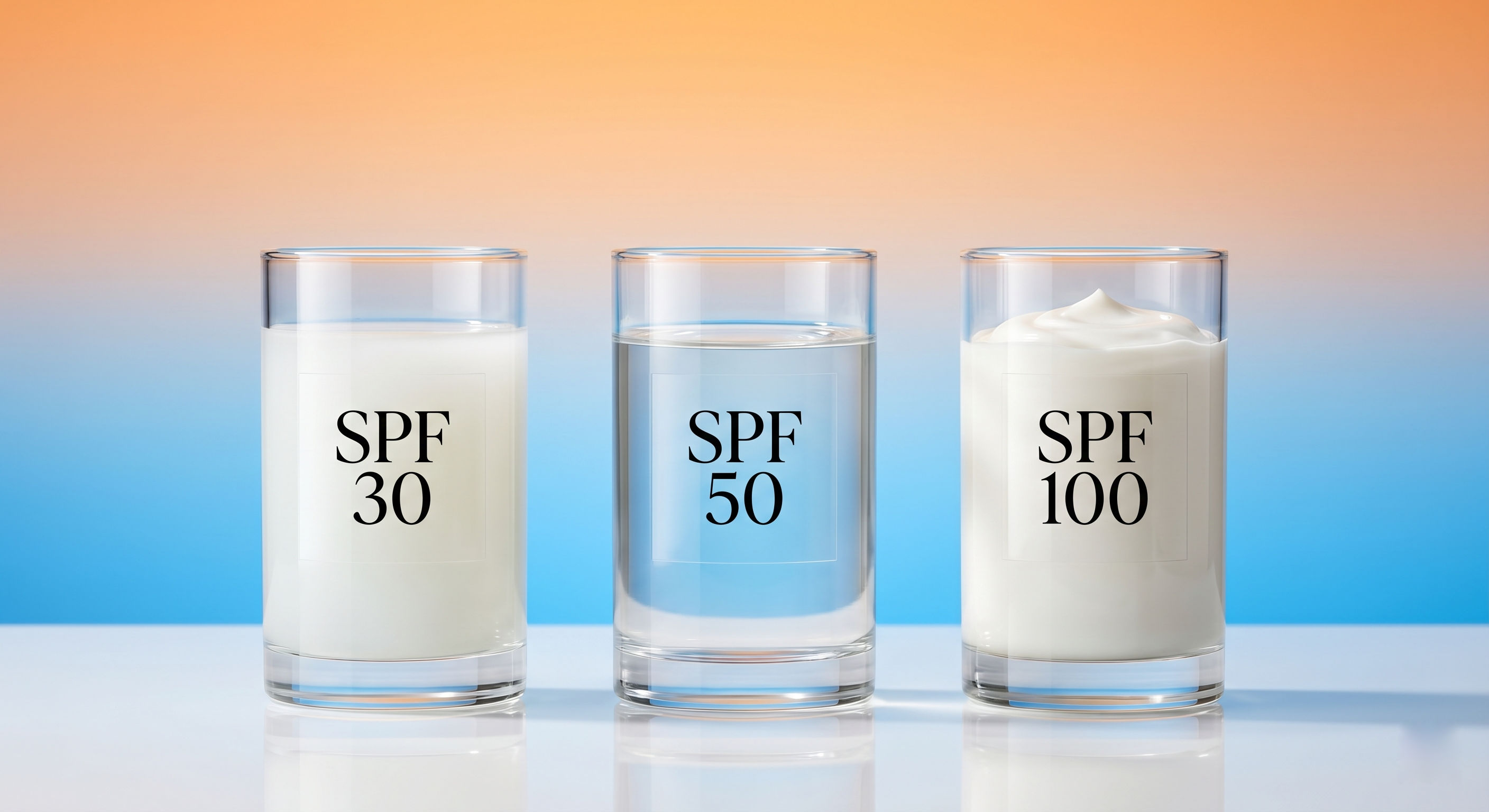
- SPF 15: Blocks ~93% of UVB rays. Suitable only for very short, incidental exposure.
- SPF 30: Blocks ~97% of UVB rays. The dermatologist-recommended minimum for daily indoor/office use.
- SPF 50: Blocks ~98% of UVB rays. The Gold Standard for India, especially for commuters and outdoor activities.
- SPF 100: Blocks ~99% of UVB rays. Offers a marginal 1% increase over SPF 50, but often requires a much thicker, greasier formula.
The 2026 Verdict: While the jump from 97% (SPF 30) to 98% (SPF 50) looks small, that 1% difference actually means you're letting through 50% less UV radiation to your skin. In the intense Indian sun, that "extra 1%" is the difference between a slight glow and a painful burn.
2. PA Ratings: The "Silent" Protection You Need
While SPF handles the "burn," the PA Rating (based on the PPD method) handles the "age." PA measures protection against UVA rays, which penetrate glass and clouds to cause wrinkles, sagging, and deep-seated pigmentation.
- PA+ :Some UVA protection.
- PA++ :Moderate protection (good for rainy days).
- PA+++ :High protection (the daily standard).
- PA++++ :Extremely High Protection. This is the highest rating available in 2026 and is essential for preventing stubborn tanning and melasma in tropical regions.
3. Strategic Selection: Which SPF for Which Scenario?
Scenario A: The "Office Hero" (Mostly Indoors)
If you spend your day in an AC office but sit near a window or commute for 20-30 minutes:
- Recommendation: SPF 30 PA+++
- Why: Glass blocks UVB (burning) but lets in UVA (aging). SPF 30 is lightweight and comfortable for all-day wear.
- Top Nykaa Pick: Ponds Super Light Gel SPF 35 or Neutrogena Hydro Boost Water Gel.
Scenario B: The "Outdoor Adventurer" (Travel, Sports, Beach)
If you are heading to Goa, trekking in the Himalayas, or simply out in the sun between 11 AM and 4 PM:
- Recommendation: SPF 50+ PA++++
- Why: You need a higher "safety buffer." High altitudes and water reflection intensify UV damage.
- Top Nykaa Pick: Re'equil Ultra Matte Dry Touch SPF 50 or The Derma Co 1% Hyaluronic Aqua Gel.
Scenario C: The "Pigmentation Warrior" (Treating Dark Spots)
If you are actively using Retinol, Vitamin C, or treating Melasma:
- Recommendation: SPF 50 PA++++ (Tinted)
- Why: Skin-lightening actives make skin more sun-sensitive. Tinted formulas containing Iron Oxides also block Blue Light from your screens, which can worsen dark spots.
- Top Nykaa Pick: La Shield Fisico Tinted or Minimalist Multi-Vitamin SPF 50.
4. Most Searched SPF Myths Debunked
- Myth: SPF 100 lasts longer than SPF 30.
- Fact: All sunscreens, regardless of the number, break down after 2 to 3 hours of exposure. You must reapply SPF 100 just as often as SPF 30.
- Myth: High SPF is "too strong" for the face.
- Fact: SPF is a measure of filtering capacity, not "chemical strength." Modern SPF 50 formulas are now just as lightweight and "invisible" as lower SPFs.
- Myth: I don't need SPF 50 because I have a dark skin tone.
- Fact: While melanin provides some natural protection (roughly SPF 3), Indian skin is highly prone to Post-Inflammatory Hyperpigmentation (PIH). High SPF is required to keep skin tone even.
Frequently Asked Questions
-
Is SPF 50 better than SPF 30 for Indian skin?
Generally, yes. Given India's high UV Index, SPF 50 provides a better safety margin, especially because most people apply only half the required amount of sunscreen.
-
Does SPF 50 cause more breakouts than SPF 30?
Not in 2026. Breakouts are caused by heavy oils or comedogenic ingredients, not the SPF level itself. Look for "Oil-free" or "Aqua-gel" labels if you are acne-prone.
-
What does "Broad Spectrum" actually mean?
It means the sunscreen has been tested to block both UVA and UVB rays. A sunscreen can be SPF 50 but not broad-spectrum (though most on Nykaa are). Always check for the "Broad Spectrum" label.
-
Can I tan while wearing SPF 50?
Yes. No sunscreen blocks 100% of rays. However, SPF 50 PA++++ will make the tanning process significantly slower and prevent the "leathery" texture associated with sun damage.
-
Is it okay to use SPF 50 every day?
Absolutely. It is the most effective anti-aging product you can own. Consistent daily use of SPF 50 is clinically proven to keep skin looking 10 years younger over a lifetime.
-
Why do some sunscreens say SPF 50+?
The "+" sign indicates that the actual tested SPF was higher (e.g., SPF 62 or 70), but regulations in many regions cap the labeled number at 50 to prevent a false sense of security.Can I use SPF 30 and then apply an SPF 20 foundation for SPF 50?
-
Can I use SPF 30 and then apply an SPF 20 foundation for SPF 50?
No. SPF values do not add up. Your protection level will only be as high as the strongest single layer you applied (in this case, SPF 30).
-
Is SPF 30 enough for staying indoors?
Yes, SPF 30 PA+++ is considered the perfect "Indoor Shield." It provides 97% protection which is more than enough for light reflecting through windows and digital screen exposure.
The 2026 Buying Rule: If you are in doubt, go for SPF 50 PA++++. It is the most versatile protection level for the Indian lifestyle, providing peace of mind whether you’re at your desk or on a terrace.