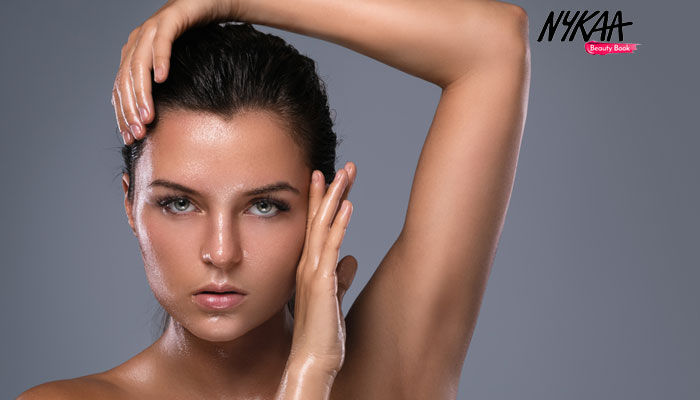
There’s a very specific kind of frustration that comes with sunscreen feeling greasy.
You apply it expecting your skin to just feel protected and comfortable, but instead your face suddenly feels:
- Sticky
- Oily
- Heavy
- Coated for the rest of the day
Then your hair sticks to your forehead, dust clings to your skin, and wearing sunscreen starts feeling more annoying than helpful.
That’s usually the point where people slowly stop using sunscreen consistently.
But honestly, greasy sunscreen isn’t always caused by the sunscreen alone.
A lot of the time, it’s the entire routine underneath it.
Sometimes the Sunscreen Isn’t the Real Problem
This is probably the biggest thing people miss.
A sunscreen might feel perfectly fine on its own. But once it gets layered over:
- Thick moisturiser
- Sticky serum
- Heavy skincare textures
- Multiple hydrating products
The entire routine suddenly starts feeling overloaded.
That’s usually where the “my sunscreen feels greasy” problem begins.
Because skincare layers don’t just sit separately on the skin, they combine into one overall texture.
And sometimes that final texture simply becomes too much.
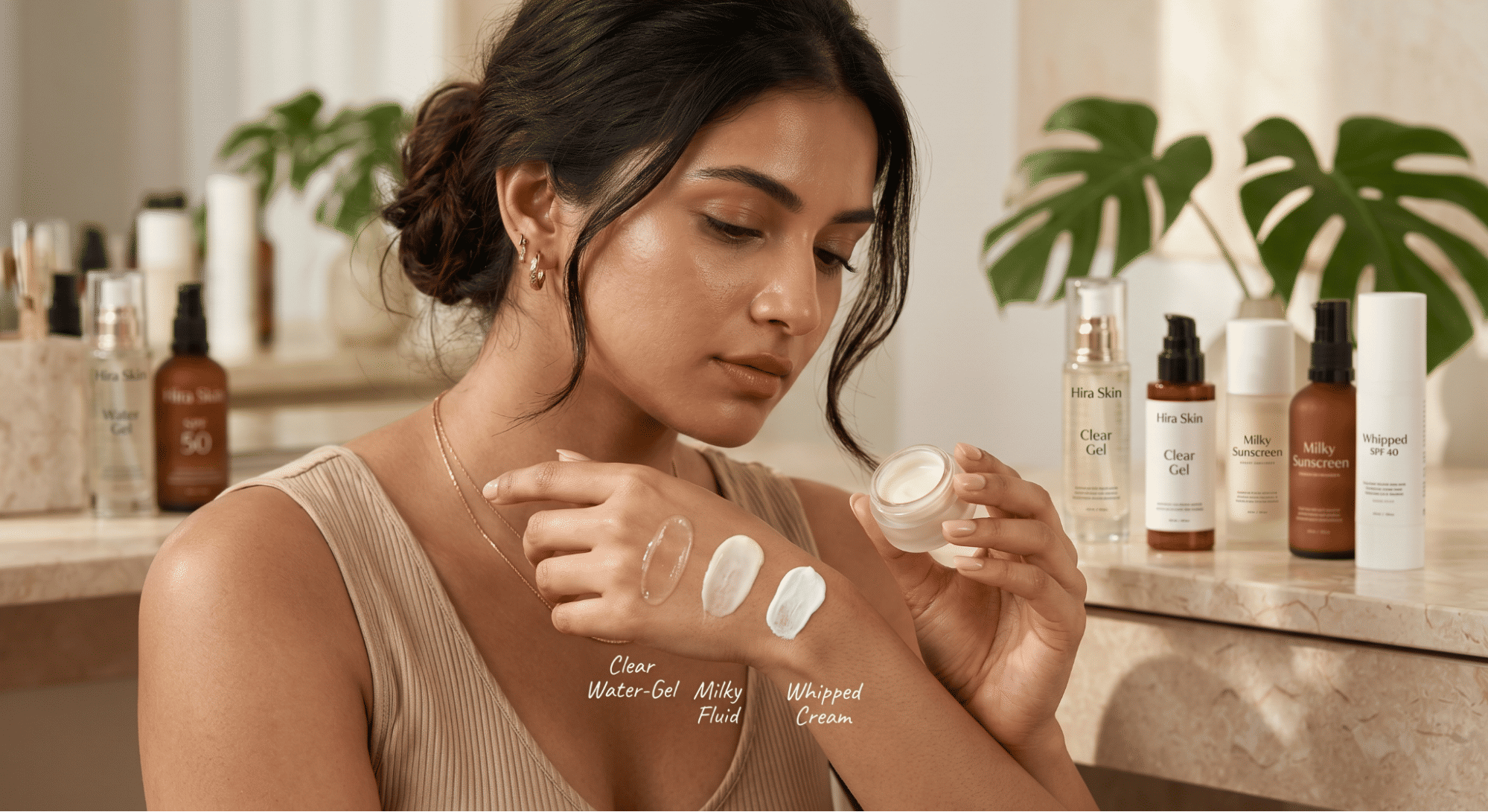
Sunscreen Texture Matters More Than SPF Number
Two sunscreens can have the exact same SPF and feel completely different on the skin.
One may:
- Absorb quickly
- Feel lightweight
- Leave a natural finish
While another:
- Sits heavily on the surface
- Feels oily within an hour
- Never fully settles
That difference usually comes down to texture and formulation.
Usually:
| Texture Type | How It Often Feels |
|---|---|
| Gel sunscreen | Lightweight and fresh |
| Fluid sunscreen | Fast-absorbing |
| Lightweight lotion | Comfortable daily wear |
| Thick cream sunscreen | Rich and heavier |
Oily or humid-climate skin generally feels more comfortable with lighter textures.
Humidity Makes Sunscreen Feel Much Heavier
This becomes very obvious during summer or humid weather.
Even a sunscreen you normally like can suddenly start feeling greasy because your skin already feels:
- Warm
- Slightly damp
- More oily than usual
Once sunscreen gets added on top, everything feels more noticeable.
Usually:
| Weather Condition | What Often Happens |
|---|---|
| Humid weather | Skin becomes shiny faster |
| Dry heat | Sunscreen absorbs more easily |
| Winter | Less greasy feeling overall |
| Air-conditioned spaces | Lighter texture feel |
So sometimes the sunscreen didn’t change at all, but the environment around your skin did.
Too Many Skincare Layers Underneath Can Make Sunscreen Worse
This happens surprisingly often.
A routine like:
- Hydrating toner
- Thick serum
- Rich moisturiser
- Sunscreen
might sound completely normal individually.
But together, the skin starts feeling:
- Sticky
- Heavy
- Congested
- Over-layered
That’s why fixing greasy sunscreen often has more to do with simplifying the routine underneath it rather than immediately replacing the sunscreen itself.
Some Ingredients Naturally Feel Heavier on the Skin
Not every sunscreen is designed to feel invisible.
Certain ingredients naturally create richer textures.
| Ingredient | How It Usually Feels |
|---|---|
| Silicones | Smooth but slightly heavy |
| Shea Butter | Rich and creamy |
| Glycerin | Can feel sticky in humidity |
| Niacinamide | Usually lightweight |
| Hyaluronic Acid | Hydrating but slightly tacky |
Sometimes the issue isn’t that the formula is "bad"; it’s just that the texture combination doesn’t suit your skin type or climate.
Applying Too Much at Once Can Change the Entire Finish
This is another thing people notice over time.
Many people either:
- Use far too little sunscreen
- Or suddenly apply a thick amount all at once and hate how it feels
A better approach is usually applying sunscreen in thinner layers rather than one very heavy layer immediately.
That tends to:
- Sit more evenly
- Absorb better
- Feel less overwhelming on the skin
Especially with fluid or gel textures.
You May Not Need a Rich Moisturiser Underneath
This depends on your skin type and environment.
If your sunscreen already feels moisturising, layering a thick cream underneath can quickly make everything feel greasy.
In humid weather especially, many people prefer:
- Lightweight moisturiser
- Hydrating serum only
- Or skipping heavy creams during daytime entirely
That often makes sunscreen feel much more wearable.
The Goal Isn’t “Matte” Skin Just Comfortable Skin
This part matters because sunscreen advice sometimes focuses too much on eliminating all shine completely.
But healthy skin naturally has some glow.
Usually, the real goal is:
- No uncomfortable stickiness
- No heavy coating feeling
- Sunscreen that settles properly
- Skin that feels easy to live with during the day
And honestly, when sunscreen feels comfortable, daily consistency becomes much easier too.
When a Sunscreen Suits You, You Stop Thinking About It
That’s usually the biggest sign.
Your sunscreen:
- Absorbs properly
- Doesn’t feel exhausting after an hour
- Sits comfortably through the day
- Works with the rest of your routine
Not invisible. Just comfortable enough that you stop noticing it constantly.
And honestly, that’s usually what good sunscreen feels like in real life.
Frequently Asked Questions
-
Why does my sunscreen feel greasy on my skin?
Usually because of heavy textures, humidity or too many skincare layers underneath.
-
How can I fix greasy sunscreen problems?
Try lighter sunscreen textures and simplify the skincare products layered underneath.
-
Can moisturiser make sunscreen feel heavier?
Yes. Rich moisturisers underneath sunscreen can make the overall routine feel greasy, especially in humid weather.
-
What sunscreen texture works best for oily skin?
Gel sunscreens, fluid textures and lightweight lotions usually feel more comfortable for oily skin.
-
Should sunscreen feel sticky after applying?
A slight tacky feeling initially can be normal, but sunscreen shouldn’t stay uncomfortably sticky or heavy for long.