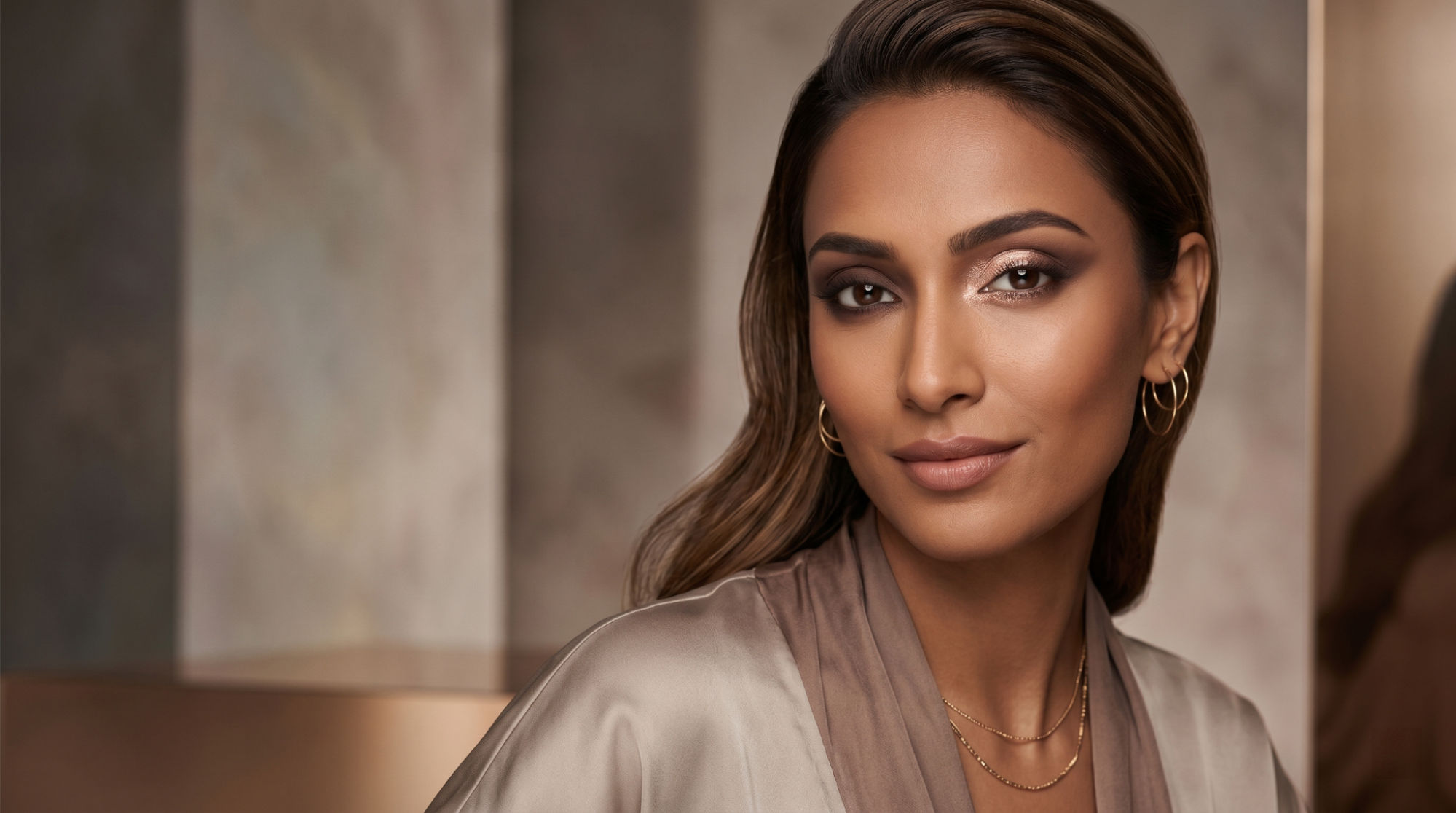
Matte and shimmer eyeshadows do different jobs, which is why most balanced eye looks use both rather than choosing one over the other.
In This Story:
- Why Matte Eyeshadow Defines Eyes
- Why Shimmer Eyeshadow Brightens Eyes
- Best Eyeshadow For Hooded Eyes
- Best Eyeshadow For Round Eyes
- Why Deep-Set Eyes Need Brightness
- Why Almond Eyes Suit Both
- Matte Vs Shimmer Explained
- Best Placement By Eye Shape
- Why Too Much Shimmer Backfires
- Day Vs Night Eyeshadow
- Best Shimmer Shades For Indian Skin
- Why Matte And Shimmer Work Together
- What Makes Eyeshadow Look Balanced
- FAQs
Eyeshadow can be confusing because a shade might look beautiful in the palette but completely different once it's on the eyes.
A lot of that comes down to the finish.
Matte eyeshadow and shimmer eyeshadow may look similar in the pan, but they look very different on application. One adds dimension and definition, the other catches light and draws the eye.
That's why understanding when to use each can make eye makeup look more balanced and flattering.
And honestly, most of the time it's less about the color itself and more about where you place it.
Matte Eyeshadow Creates Shape and Definition
Think of matte eyeshadow as the foundation of most eye looks.
Because matte formulas don't reflect light, they help create the illusion of depth.
That is why they are used often for:
- defining the crease
- adding dimension
- shaping the eyes
- creating soft shadows
Even dramatic eye makeup usually starts with matte shades first.
Without that structure underneath, eye looks can sometimes appear flat or unfinished.
Shimmer Eyeshadow Adds Brightness and Light
Shimmer works in the opposite way.
It is eye-catching by virtue of reflecting light, not creating depth.
Shimmer eyeshadow can:
- brighten the eyes
- make certain areas stand out
- create a fresher appearance
- add dimension through light reflection
This is why shimmer is often placed on the eyelid rather than deep inside the crease.
Areas that naturally catch light usually benefit most from shimmer.
Matte vs Shimmer Eyeshadow for Hooded Eyes
People with hooded eyes often notice that shimmer can disappear when their eyes are open.
That's why matte shadows usually do most of the work.
Matte shades often look best:
- slightly above the natural crease
- on the outer corner
- through the transition area
This placement helps create visible shape.
Shimmer can still look beautiful, but it usually works best:
- on the center of the lid
- on the inner lid area
- where it remains visible when the eyes are open
A little shimmer often creates more impact than covering the entire eyelid.
Matte vs Shimmer Eyeshadow for Round Eyes
Round eyes usually suit a combination of both finishes.
A common approach is:
- matte shadow on the outer corner
- shimmer on the center of the lid
This helps create balance and can make the eyes appear slightly more elongated.
It's also one of the easiest eyeshadow techniques to wear for both day and evening makeup.
Shimmer Eyeshadow Can Be Very Flattering on Deep-Set Eyes
Deep-set eyes naturally have more shadow around them.
Adding shimmer to:
- the center of the eyelid
- the inner corners
can help bring brightness back into the eye area.
Using too many dark matte shades sometimes makes deep-set eyes appear even more recessed.
That's why balancing matte definition with light-reflecting shimmer often creates a softer effect.
Almond Eyes Can Wear Almost Any Eyeshadow Finish
This is one reason almond-shaped eyes appear so often in makeup tutorials.
Both matte and shimmer finishes tend to work beautifully.
You can:
- keep the look mostly matte
- focus on shimmer
- combine both finishes
Most placements naturally complement almond eye shapes.
That flexibility makes experimentation much easier.
A Simple Way to Think About Matte and Shimmer
| Finish | What It Usually Does |
|---|---|
| Matte Eyeshadow | Creates depth and shape |
| Shimmer Eyeshadow | Adds brightness and light |
| Satin Eyeshadow | Balanced soft glow |
| Metallic Eyeshadow | Strong reflective shine |
| Soft Shimmer | Natural radiance |
The easiest rule to remember:
Matte defines. Shimmer highlights.
Best Eyeshadow Placement by Eye Shape
| Eye Shape | Matte Placement | Shimmer Placement |
|---|---|---|
| Hooded Eyes | Crease, outer corner | Center lid |
| Round Eyes | Outer corner | Center lid |
| Deep-Set Eyes | Soft crease | Lid, inner corner |
| Almond Eyes | Flexible placement | Flexible placement |
Most balanced eye looks use both finishes together.
You Don't Need Shimmer Everywhere
This is a common beginner mistake.
When shimmer covers:
- the lid
- the crease
- the brow bone
all at once, the eyes can start losing definition.
Usually one or two areas of brightness create a more polished look than applying shimmer everywhere.
Strategic placement tends to look more flattering.
Daytime and Evening Makeup Use Finishes Differently
For everyday makeup:
- matte shades often do most of the work
- soft shimmer adds freshness
- subtle finishes feel easier to wear
For parties and events:
- stronger shimmer becomes more noticeable
- metallic finishes catch light beautifully
- brighter eye looks photograph well
Warm Shimmer Shades Usually Look Beautiful on Indian Skin Tones
Some of the shimmer shades do tend to blend in more naturally with warmer undertones.
Popular choices include:
- champagne gold
- bronze
- copper
- rose gold
- warm peach shimmer
They brighten without the icy contrast that some cool tones can create.
They also pair beautifully with matte browns and warm neutrals.
Most Flattering Eye Looks Use Both Matte and Shimmer
This is probably the biggest takeaway.
The most balanced eye makeup rarely relies on only one finish.
Usually it's:
- matte for structure
- shimmer for brightness
That combination creates dimension and prevents the eyes from looking flat.
Even simple everyday eye looks often use both techniques without looking overly dramatic.
When Eyeshadow Placement Feels Right, the Eyes Naturally Stand Out
That's usually the goal.
The eyes look brighter.
The shape feels balanced.
Nothing looks overly heavy.
Just enough depth and light in the right places.
And honestly, that's where both matte and shimmer eyeshadow work together best.
Frequently Asked Questions
-
Is matte or shimmer eyeshadow better?
Neither is better overall. Matte creates shape and definition, while shimmer adds brightness and dimension.
-
Does shimmer eyeshadow make eyes look bigger?
It can, especially when placed on the center of the lid or inner corners where it reflects light.
-
Are matte eyeshadows better for hooded eyes?
They often help create more visible definition around the crease and outer corners.
-
Can mature eyes wear shimmer eyeshadow?
Absolutely. Softer shimmer formulas often look beautiful when applied strategically on the lid or inner corners.
-
Should I use matte and shimmer eyeshadow together?
Usually yes. Most balanced eye looks combine matte shades for structure and shimmer shades for brightness.
-
Which eyeshadow finish looks most natural?
Soft matte and subtle shimmer finishes usually create the most natural-looking eye makeup for everyday wear.